
Public health, lived in practice.
The Community Medicine Department facilitates learning to ensure learners attain CBME competencies, emphasizing preventive, promotive and rehabilitative care. Key focus areas include epidemiology, biostatistics, research methodology, environmental and occupational health, primary health care, communicable and non-communicable diseases, vulnerable groups and National Health Programmes.
Field visits, family adoption and follow-up, health education, capacity building and health camps provide hands-on experience. The department works closely with local self-government and government health institutions. Postgraduates support undergraduate training and are prepared for roles as public-health specialists, epidemiologists, programme managers, policy advisors, faculty and researchers.
Mission
To develop socially accountable medical graduates with strong competencies in community-oriented and preventive healthcare — promoting excellence in public-health education, research and field-based learning aligned with national health priorities.
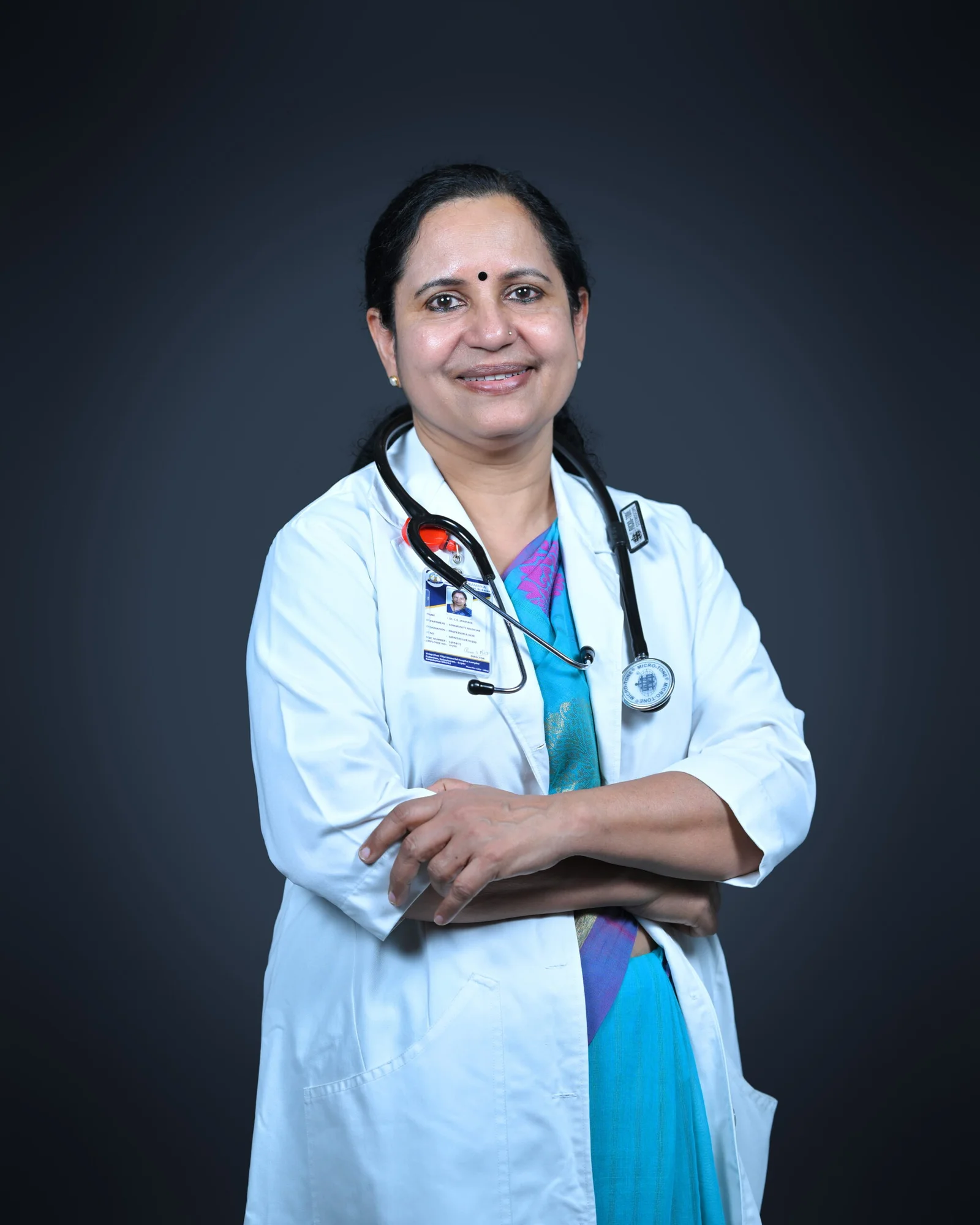
Leadership
Dr. C.S. Jayasree
MBBS, MD — Professor & HOD
Goals & Focus
Doctors who can serve a community.
The department aims to prepare students to address public-health challenges, understand community needs and contribute to improving healthcare systems — locally and globally.
Epidemiology & Biostatistics
Study and control of communicable and non-communicable diseases.
Environmental & Occupational Health
Sanitation, occupational hazards and ecological determinants.
Primary Health Care
Maternal & child health, family planning, immunization.
Vulnerable Groups
Outreach for underserved populations and equity in care.
Objectives
Learning that travels to the community.
- Concepts of health, disease and levels of prevention
- Epidemiological methods to study and control diseases
- Vital statistics, data collection and biostatistical analysis
- Demography, MCH, family planning and nutrition
- Environmental health — sanitation and occupational hazards
- National health programmes and primary healthcare systems
- Health communication for behavioural change
Facilities & Infrastructure
On-campus & in the field.
Rural & Urban Health Centres
Field experience in community-based care.
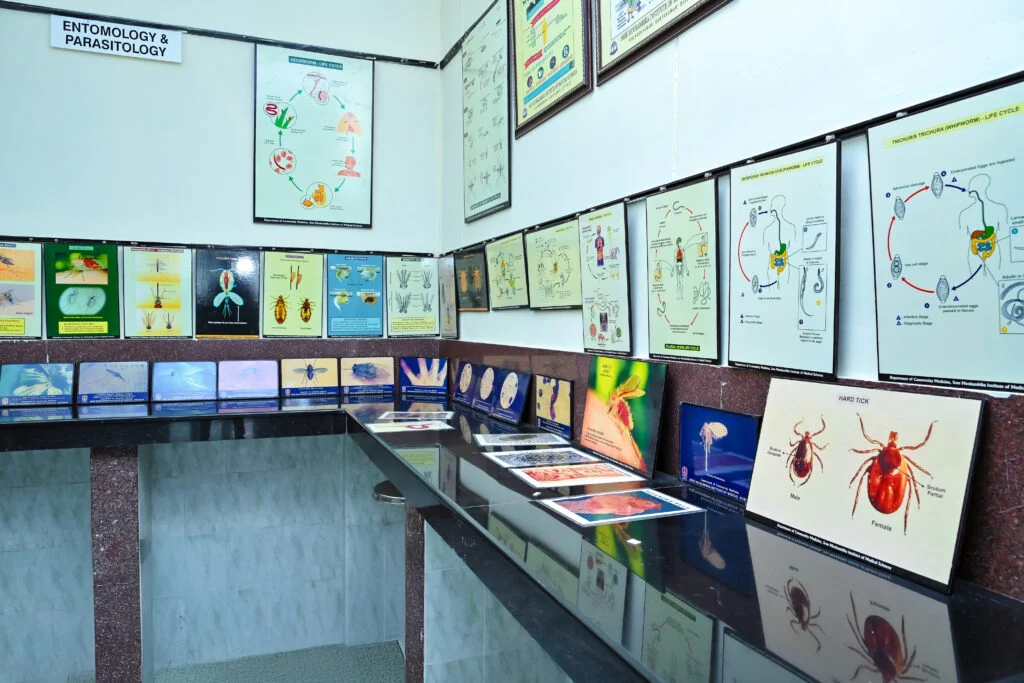
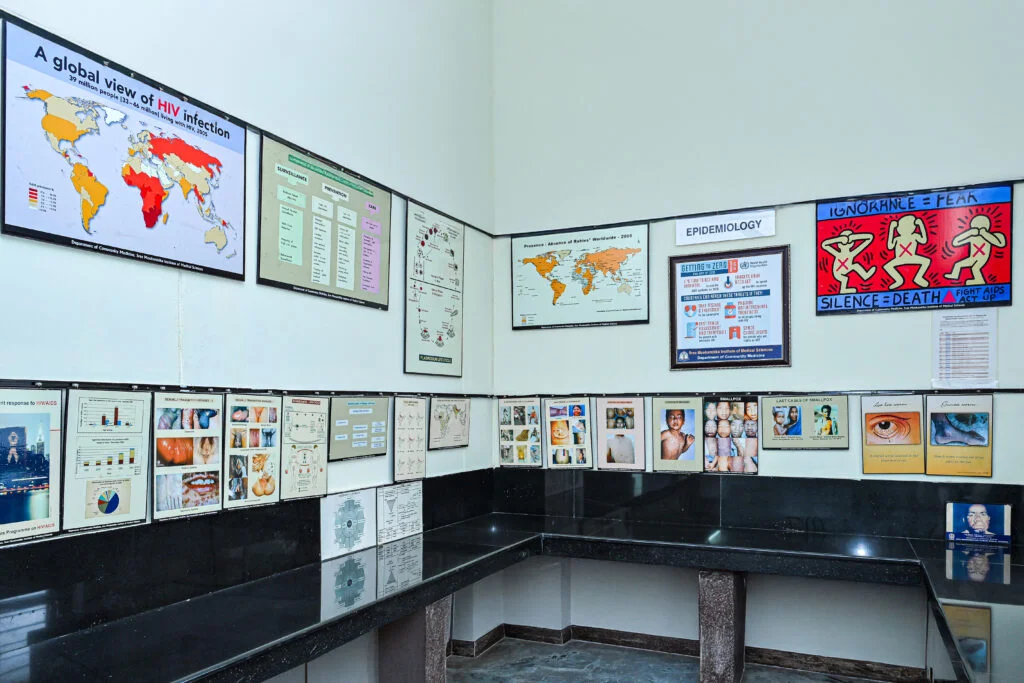
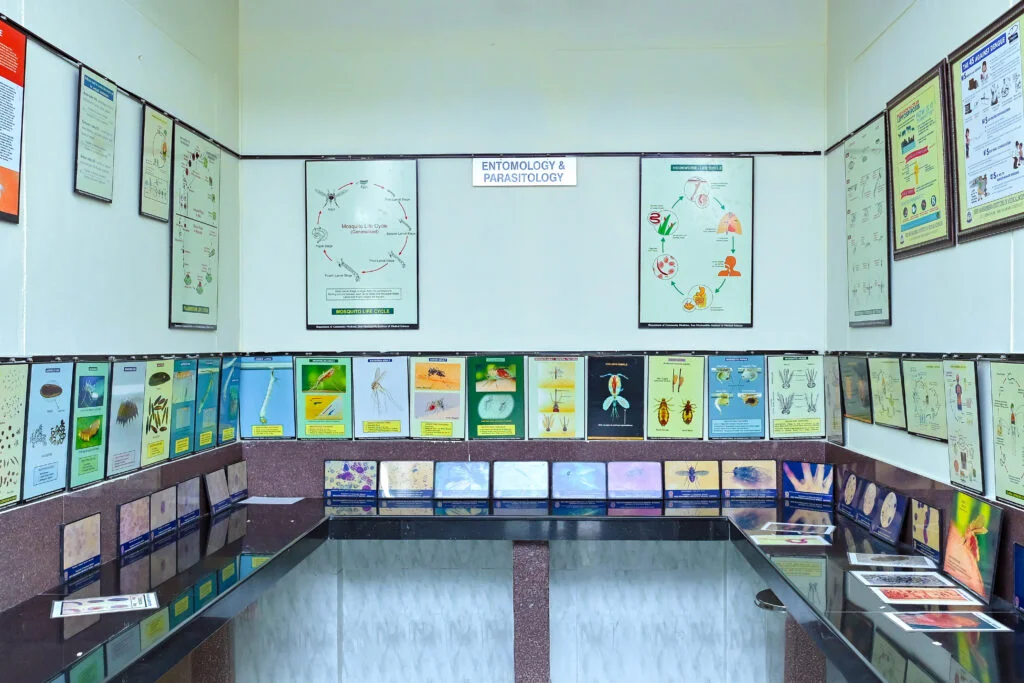
Demonstration Rooms
Small-group teaching and discussion.
Laboratory
Microscopes and learning tools for practicals.
Museum & Library
Models, public-health charts, references.
Faculty
A team of 19 educators.
| # | Name | Designation | Date of Joining |
|---|---|---|---|
| 01 | Dr. C S Jayasree | Professor & HOD | 18-11-2022 |
| 02 | Dr. Vishnu G Ashok | Professor | 01-08-2016 |
| 03 | Dr. Antoney Unni Xavier | Associate Professor | 04-01-2021 |
| 04 | Dr. Priya Ravindra Panicker | Associate Professor | 02-08-2017 |
| 05 | Dr. Mannekshkumar N | Associate Professor | 28-03-2024 |
| 06 | Dr. Prem Jerusha J D | Assistant Professor | 24-08-2023 |
| 07 | Dr. Vaisakh G T | Assistant Professor | 04-10-2023 |
| 08 | Dr. Prahatheeswaran G | Assistant Professor | 17-04-2026 |
| 09 | Dr. Aryan M G | Assistant Professor | 22-06-2026 |
| 10 | Ms. Liji Anna Vargheese | Statistician Cum Assistant Professor | 02-01-2024 |
| 11 | Dr. Shagirunisha Rizvana A M | Senior Resident | 01-02-2025 |
| 12 | Dr. Ashmicaa Nair N | Senior Resident | 02-04-2025 |
| 13 | Dr. Parvana S Vinod | Tutor | 13-10-2023 |
| 14 | Dr. Soalvell S M | Tutor | 12-02-2025 |
| 15 | Dr. Gishnu Prasad | Tutor | 04-06-2025 |
| 16 | Dr. Trikkash U Kumar | Tutor | 15-12-2025 |
| 17 | Dr. Aswathy J S | Tutor | 13-03-2026 |
| 18 | Dr. Angel V Rajan | Tutor / Lady Medical Officer | 12-07-2025 |
| 19 | Dr. Delima Antony | Tutor / Lady Medical Officer | 25-08-2025 |
Teaching & Field Training
Lectures, demonstrations, tutorials and seminars across multiple semesters — supported by rural and urban health postings, community surveys, immunization clinics and internships in national health programmes.
Community-Based Learning
Students engage directly with populations to understand health determinants, promote healthy lifestyles and address inequities — collaborating with healthcare teams to improve access for underserved groups.
Conclusion
Bridging clinical practice and public health.
By combining theoretical knowledge with field experience, Community Medicine prepares students to address real-world health challenges, implement preventive strategies and lead change in the communities they serve.