
Foundations of normal function.
The Department of Physiology functions in strict compliance with the norms and guidelines laid down by the National Medical Commission, ensuring the highest standards in medical education. The department is adequately staffed with experienced and qualified faculty members, supported by trained technical and non-teaching personnel.
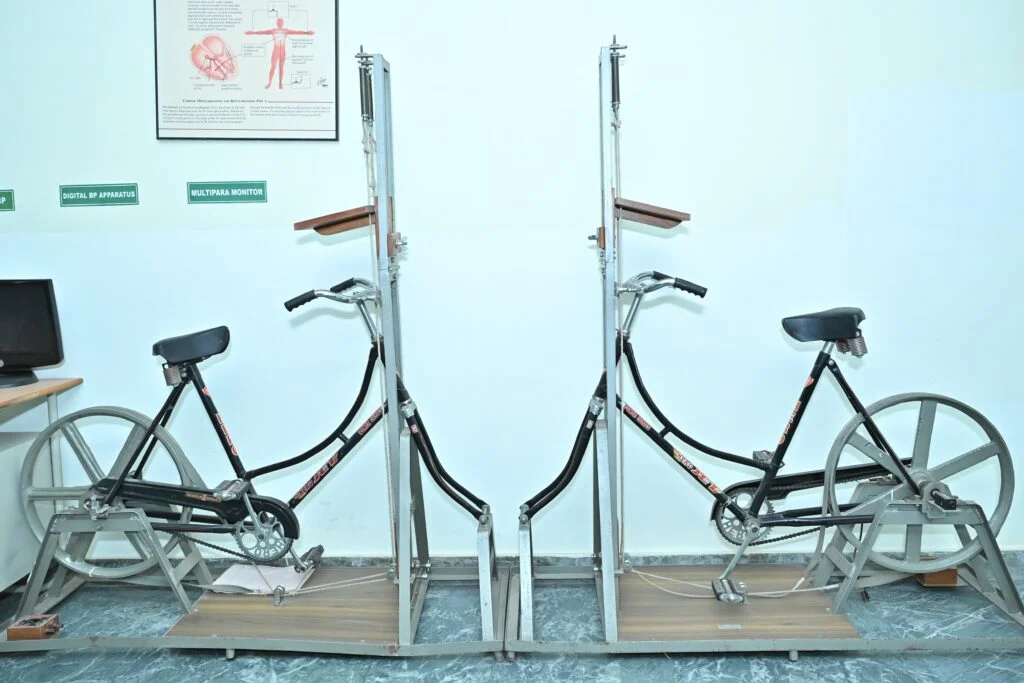
It is equipped with well-maintained laboratories, modern instruments, and audio-visual teaching aids that facilitate effective practical training and interactive learning. The department emphasizes competency-based medical education, integrating theory with practical and clinical applications to enhance students’ understanding of normal human functions and their relevance to health and disease.
Mission
To provide high-quality, competency-based medical education that integrates theory, practical skills, and clinical applications — fostering academic excellence, research and holistic professional development.
Leadership
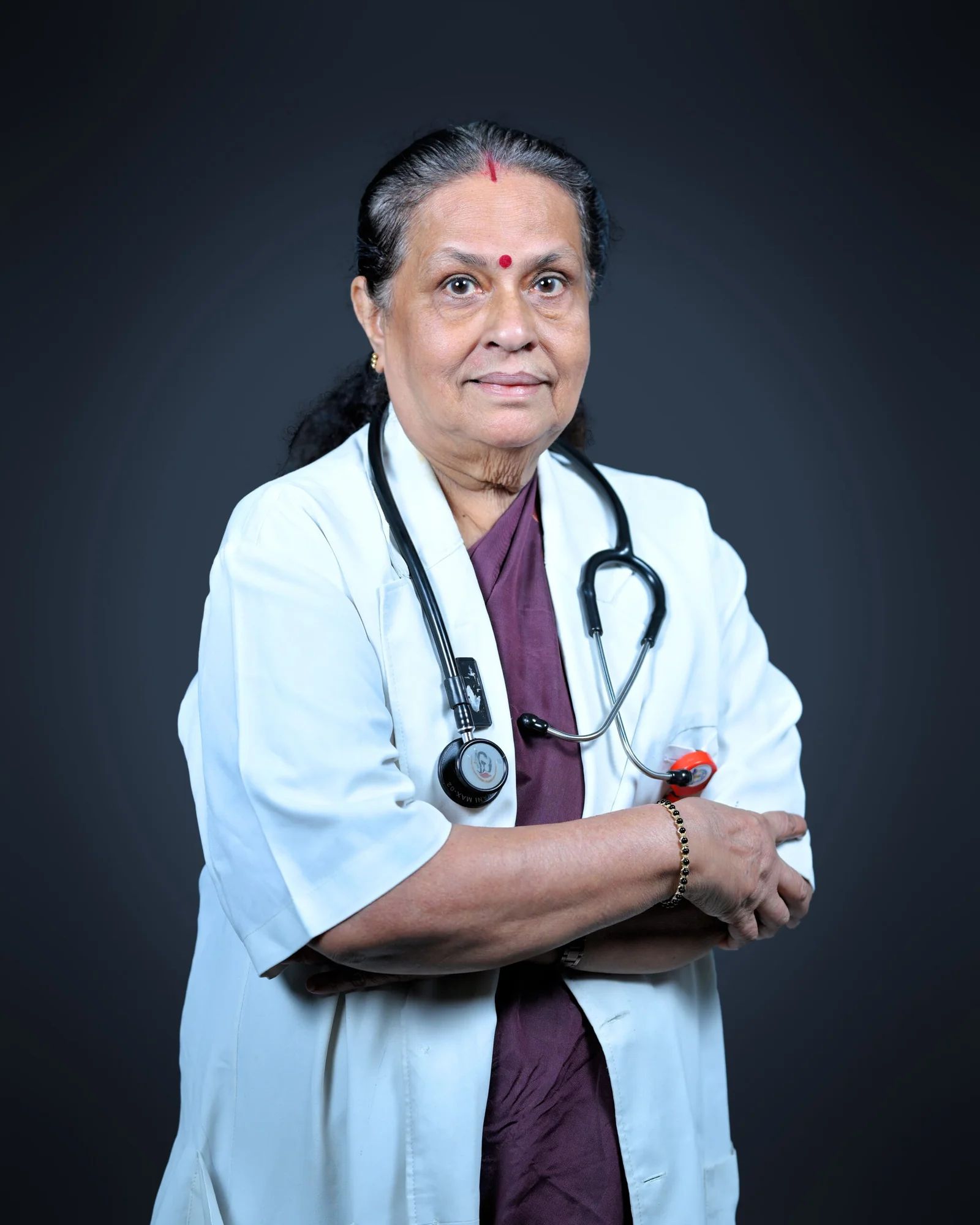
Dr. Shobha Kumari T
MBBS, MD — Professor & HOD
Objectives
Understand the body. Apply it at the bedside.
Students are trained to apply physiological principles to clinical situations, understanding the basis of disease processes and medical treatments.
- Understand the normal functioning of the human body
- Learn how body systems coordinate to maintain homeostasis
- Apply physiological principles to clinical situations
- Build a foundation for understanding disease mechanisms
Scope & Importance
Every system, connected.
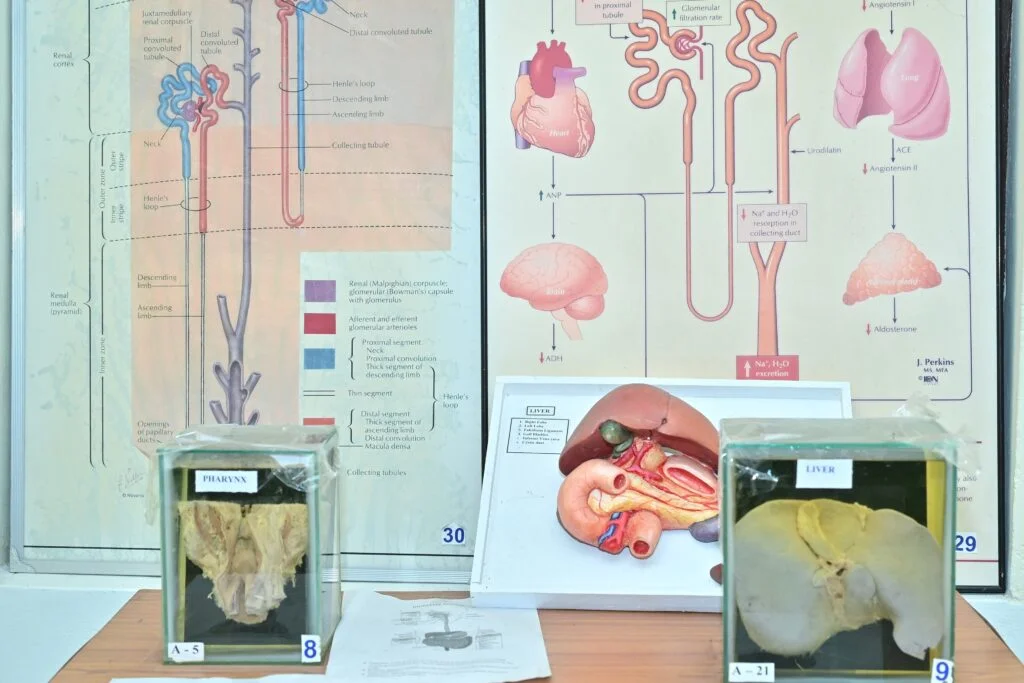
Physiology covers the nervous, cardiovascular, respiratory, digestive, excretory, endocrine and reproductive systems — including mechanisms of nerve conduction, muscle activity, hormonal regulation and fluid balance essential for survival.
Nervous System
Nerve conduction, reflexes and integrative neural function.
Cardiovascular
Cardiac cycle, blood pressure and circulatory regulation.
Respiratory
Pulmonary mechanics, gas exchange and ventilation control.
Endocrine & Renal
Hormonal regulation, fluid balance and excretory function.
Facilities & Infrastructure
Modern labs for real experiments.
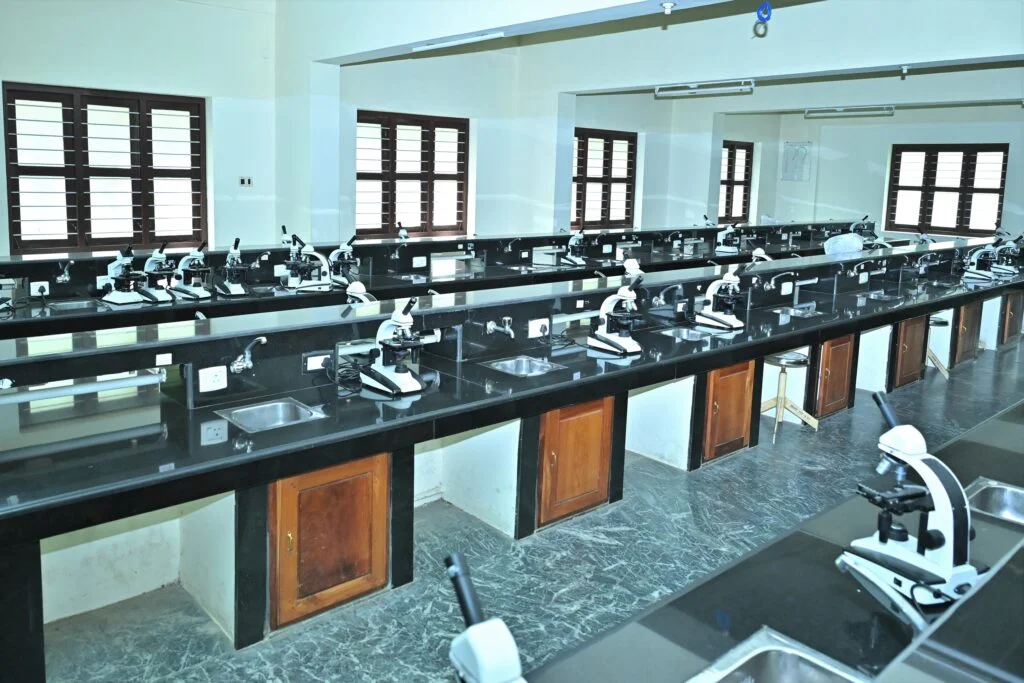
Well-equipped lecture halls, demonstration rooms, haematology and clinical-skill labs, research labs and departmental libraries support an end-to-end academic experience.
Lecture Halls
Well-equipped halls with modern audiovisual aids.
Haematology Lab
Hands-on training in blood-cell counts and clinical haematology.
Clinical Skill Lab
Recording BP, heart rate and physiological parameters.
Research Lab
Supports faculty and PG research projects.
Departmental Library
Textbooks and references for self-directed learning.
Demonstration Rooms
Small-group teaching and experiment demonstrations.
Faculty
A team of 15 educators.
| # | Name | Designation |
|---|---|---|
| 01 | Dr. Indu K Pisharody | Professor |
| 02 | Dr. Sobhakumari T | Professor |
| 03 | Dr. Florence Nesa Bella Deva Sigamani | Associate Professor |
| 04 | Dr. Archana Chandran | Associate Professor |
| 05 | Dr. Rajagopalan Asari K | Associate Professor |
| 06 | Dr. Lisha Vincent | Assistant Professor |
| 07 | Dr. Liji Justin | Senior Resident |
| 08 | Dr. Naveen R | Tutor |
| 09 | Dr. Akhilya Nadesan Jaya | Tutor |
| 10 | Dr. Praveen Raj R S | Tutor |
| 11 | Dr. Vinisha Jasmine V F | Tutor |
| 12 | Dr. Vighnesh B | Tutor |
| 13 | Dr. Merfin Anto M J | Tutor |
| 14 | Dr. Gankhio Glady Louis | Tutor |
| 15 | Dr. Ancy Arun Bensam Vimala | Tutor |
Academic Programme
Lectures, tutorials and seminars build conceptual understanding. Practical sessions let students record physiological parameters such as blood pressure and heart rate, and learn clinical examination techniques that correlate theory with real-life application.
Research & Learning
Students and faculty are motivated to participate in research projects and academic discussions. Competency-based teaching ensures graduates acquire both knowledge and practical skills required for medical practice.
Conclusion
A strong foundation for advanced medical studies.
By combining theoretical knowledge with practical training, Physiology prepares students to understand disease mechanisms and apply this knowledge in clinical practice — laying the foundation for advanced medical studies and healthcare delivery.