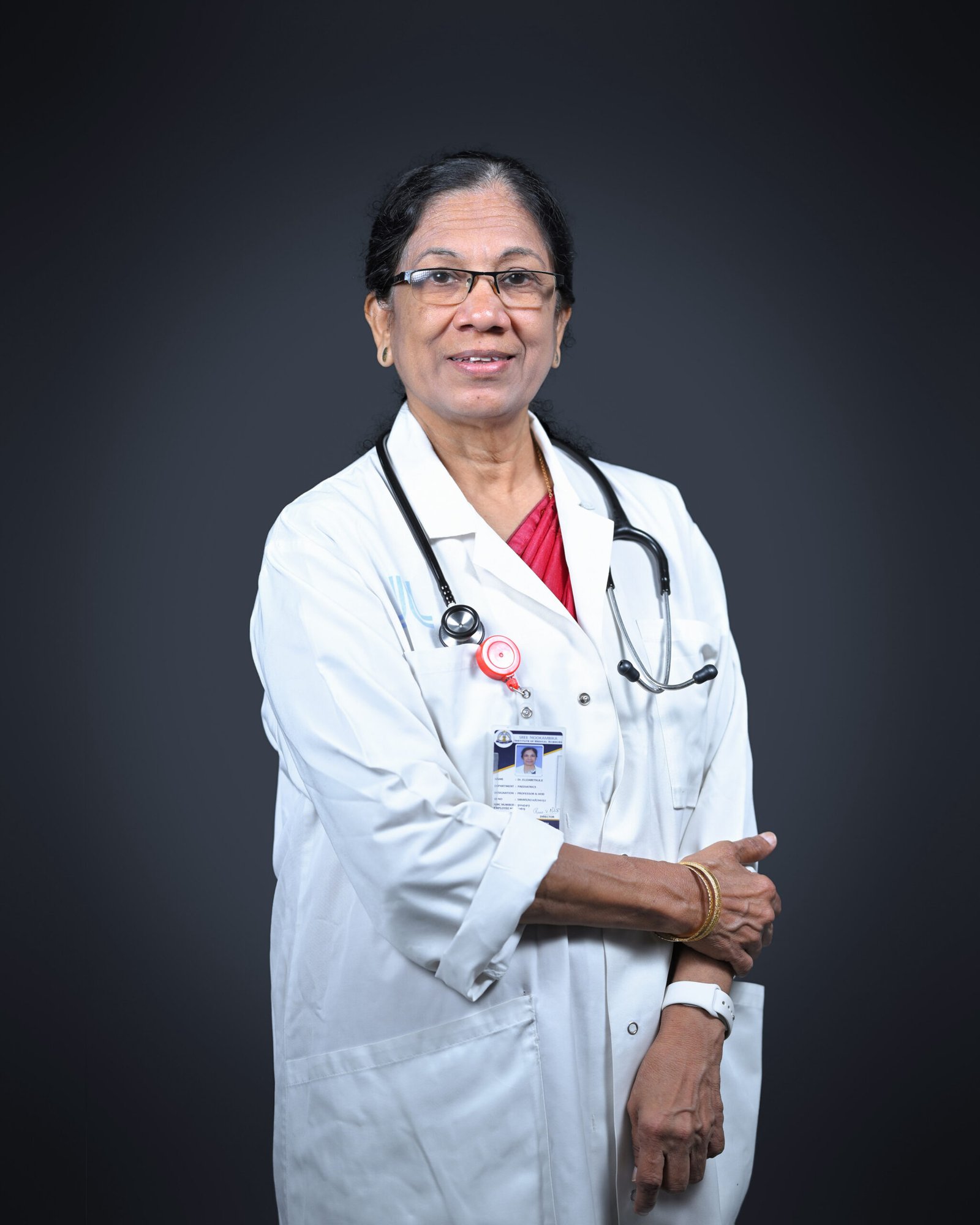
Dr. K. E. Elizabeth
MBBS, MD . Professor & HOD
Overview
The Department of Pediatrics is dedicated to providing comprehensive, high-quality care for newborns, infants, and children, aiming to be a centre of excellence in pediatric services, education, and research. It focuses on preventive, promotive, and curative child health to reduce morbidity and mortality. The department is equipped with advanced facilities, including NICU, PICU, specialty clinics, pediatric dialysis, EEG-supported neurology, and high-risk infant follow-up programs. Children with routine, complex, and critical conditions receive evidence-based and timely care. It also plays a key role in undergraduate and postgraduate education through structured teaching, clinical training, case discussions, and seminars. Research and academic activities are actively encouraged to advance pediatric knowledge. Preventive and community health initiatives are integrated into patient care to promote overall child well-being. Through these efforts, the department strives to improve child health outcomes and foster healthier communities.
Overview
The Department of Pediatrics at Sree Mookambika Institute of Medical Sciences (SMIMS) is dedicated to providing comprehensive, high-quality healthcare for newborns, infants, children, and adolescents. The department strives to deliver compassionate, evidence-based care while advancing excellence in clinical services, education, and research. The department emphasizes preventive, promotive, and curative child health, with the goal of improving pediatric outcomes and reducing childhood morbidity and mortality. Children with routine, complex, and critical medical conditions receive timely, specialized care supported by modern diagnostic and treatment facilities. The department is equipped with advanced pediatric care facilities including Neonatal Intensive Care Unit (NICU), Pediatric Intensive Care Unit (PICU), specialty pediatric clinics, pediatric dialysis services, EEG-supported pediatric neurology services, and high-risk infant follow-up programs. As a teaching department, Pediatrics plays a vital role in undergraduate and postgraduate medical education, offering structured academic training through clinical postings, bedside teaching, case discussions, seminars, and research activities. Preventive and community health programs are an integral part of the department’s activities, promoting child health awareness, immunization, early diagnosis, and timely intervention. Through its commitment to clinical excellence, academic development, and community outreach, the department continues to work towards improving child health and building healthier communities.
Dr. K. E. Elizabeth
MBBS, MD . Professor & HOD
Overview
The Department of Pediatrics is dedicated to providing comprehensive, high-quality care for newborns, infants, and children, aiming to be a centre of excellence in pediatric services, education, and research. It focuses on preventive, promotive, and curative child health to reduce morbidity and mortality. The department is equipped with advanced facilities, including NICU, PICU, specialty clinics, pediatric dialysis, EEG-supported neurology, and high-risk infant follow-up programs. Children with routine, complex, and critical conditions receive evidence-based and timely care. It also plays a key role in undergraduate and postgraduate education through structured teaching, clinical training, case discussions, and seminars. Research and academic activities are actively encouraged to advance pediatric knowledge. Preventive and community health initiatives are integrated into patient care to promote overall child well-being. Through these efforts, the department strives to improve child health outcomes and foster healthier communities.
Dr. K. E. Elizabeth
MBBS, MD . Professor & HOD
Professor & HOD
Mission
The mission of the Department of Pediatrics is to provide comprehensive, evidence-based care for newborns and children while promoting preventive, promotive, and curative health services. It is also committed to excellence in medical education, training, and research to improve child health outcomes.
Contact Information
Email id:
paediatrics@sreemookambikainstitute.com
Faculties
| S.No | Name | Designation |
|---|---|---|
| 1 | Dr. P M Suresh | Professor |
| 2 | Dr. B Vijaya Kumar | Professor |
| 3 | Dr. Elizabeth K E | Professor |
| 4 | Dr. Sanjay Krishna Masaraddi | Professor |
| 5 | Dr. Kiron S | Associate Professor |
| 6 | Dr. Wazeem Kadengal | Assistant Professor |
| 7 | Dr. Monish P R | Assistant Professor |
| 8 | Dr. Shajith Kumar Swaminathan Kumar | Assistant Professor |
| 9 | Dr. Subodh Segar A R | Assistant Professor |
| 10 | Dr. Bijin Jose J | Senior Resident |
| 11 | Dr. T Gopi Naath | Senior Resident |
| 12 | Dr. Varsha Baiju | Senior Resident |
| 13 | Dr. Karthik Sathyanarayanan | Junior Resident |
| 14 | Dr. Manjusha C | Junior Resident |
| 15 | Dr. S. Joshan Vinrajkar | Junior Resident |
| 16 | Dr. V Paari | Junior Resident |
| 17 | Dr. Veena R S | Junior Resident |
| 18 | Dr. Asmitha Stanly Geetha | Junior Resident |
| 19 | Dr. Devaprasanna | Junior Resident |
| 20 | Dr. Ashna S Kariyath | Junior Resident |
| 21 | Dr. Parthiban P | Junior Resident |
| 22 | Dr. Arlen Steve M S | Junior Resident |
| 23 | Dr. Ram Prakash Murugan | Junior Resident |
| 24 | Dr. I. Sushmitha | Junior Resident |
| 25 | Dr. Gowtham Piramanandam Abiramasundari | Junior Resident |
| 26 | Dr. Bowmigha P | Junior Resident |
| 27 | Dr. Manoj Elavalagan | Junior Resident |
| 28 | Dr. Ragulsaran | Junior Resident |
| 29 | Dr. Ramkumar M | Junior Resident |
Department Infrastructure
The Department of Pediatrics functions with three clinical units, providing comprehensive care for neonates, infants, children, and adolescents.
- Total beds: 90
- Number of clinical units: 3
- Neonatal Intensive Care Unit (NICU) for critically ill newborns
- Pediatric Intensive Care Unit (PICU) for critically ill children
- High-risk infant follow-up services
- Dedicated play area for children to create a child-friendly hospital environment
The inpatient facilities are supported by advanced monitoring systems, emergency resuscitation equipment, and specialized pediatric care facilities, ensuring safe management of both routine and critical pediatric conditions.
Outpatient Department (OPD)
The Pediatric Outpatient Department provides consultation, preventive services, and follow-up care for infants and children.
Facilities available in the OPD include:
- Clinical examination rooms
- Immunization room
- Child welfare and guidance clinic
- Well-baby clinic
- Breastfeeding counseling room
- Demonstration room for parental education
- Child-friendly waiting and play area
These facilities support growth monitoring, vaccination, developmental assessment, nutritional counseling, and early detection of childhood illnesses.
Advanced Equipment
The Department of Pediatrics is equipped with modern neonatal and pediatric critical care equipment to manage routine, complex, and life-threatening conditions in newborns and children.
Key equipment available in the department includes:
- Neonatal ventilators including high-frequency ventilation systems
- CPAP and Bubble CPAP systems for neonatal respiratory support
- HHHFNC (High Humidity High Flow Nasal Cannula) systems
- Therapeutic hypothermia machine for neonatal neuroprotection
- Phototherapy units (CFL & LED) for neonatal jaundice management
- Radiant warmers and neonatal incubators
- Transport incubator for safe neonatal transport
- Oxygen blenders and oxygen delivery systems
- T-piece neonatal resuscitator (Neopuff)
- Multiparameter monitors and pulse oximeters
- ABG analyzer for critical care monitoring
- EEG machine for pediatric neurology evaluation
- OAE/BERA systems for neonatal hearing screening
- Echo with color Doppler for pediatric cardiac evaluation
- Ultrasound systems
- Defibrillator and crash cart systems
- Syringe pumps and infusion pumps
- Bilirubinometer for neonatal jaundice assessment
- Computerized pulmonary function testing (PFT) equipment
These advanced technologies support neonatal intensive care, pediatric emergency care, and specialized diagnostic evaluation.
Intensive Care Facilities
The department provides specialized intensive care services for critically ill newborns and children.
Neonatal Intensive Care Unit (NICU):
- 10-bed NICU
- Neonatal ventilators and respiratory support systems
- Phototherapy units and radiant warmers
- Incubators and transport incubator
- Bubble CPAP and oxygen therapy systems
- Fully equipped neonatal resuscitation systems
- Central oxygen supply and suction systems
- Continuous multiparameter monitoring
Pediatric Intensive Care Unit (PICU):
- 10-bed PICU
- Pediatric ventilators
- Multiparameter monitoring systems
- ABG analysis facilities
- Portable ventilators and emergency resuscitation systems
- Central oxygen and suction systems
- Fully equipped crash carts
Both intensive care units are supported by advanced laboratory, radiology, and hospital information systems for real-time patient monitoring and management.
Specialty Clinics
The department conducts several specialty pediatric clinics to provide focused care for children with specific medical conditions.
- Pediatric Cardiology Clinic – Friday
- Pediatric Nephrology Clinic – Wednesday
- Pediatric Endocrinology Clinic – Tuesday
- Pediatric Hematology Clinic – Wednesday
- Pediatric Neurology Clinic – Saturday
- Pediatric Asthma Clinic – Tuesday
- Thalassemia Clinic – Wednesday
- Pediatric Rheumatology Clinic – Wednesday
- Infectious Disease Clinic – Daily
Neonatal Clinics:
- High-Risk Infant Follow-up Clinic – Monday
- Well Baby Clinic – Daily
Preventive Care Clinics:
- Immunization Clinic – Daily (BCG on Wednesdays)
- Development and Early Intervention Clinic (DEIC) – Saturday
- Nutritional Rehabilitation Clinic (NRC) – Thursday
These clinics ensure specialized care, early diagnosis, and long-term management of pediatric conditions.
Pediatric Services
The department provides a wide range of specialized pediatric and neonatal services including:
- Neonatal intensive care (NICU)
- Neonatal and pediatric ventilation
- Exchange transfusion
- Phototherapy for neonatal jaundice
- Parenteral nutrition support
- Pediatric dialysis services
- Hemodialysis and peritoneal dialysis
- Continuous renal replacement therapy (CRRT)
- Pediatric endoscopy and bronchoscopy
- Pediatric pulmonary function testing
- Thalassemia day-care services
- Pediatric physiotherapy and rehabilitation
- Child counseling and developmental services
- Investigative diagnostic facilities
- Delivery room neonatal services
Procedures Performed
The department performs several advanced diagnostic and therapeutic procedures including:
- Umbilical vein catheterization
- PICC line insertion
- Central venous line insertion
- Arterial cannulation
- Surfactant administration (INSURE / LISA technique)
- Exchange transfusion (partial and double volume)
- Lumbar puncture
- Pleural tap
- Diagnostic peritoneal tap
- Therapeutic ascitic tap
- Urinary catheterization and catheter sampling
- Suprapubic puncture
- Acute peritoneal dialysis
- Bone marrow aspiration and biopsy
- Renal biopsy
- FNAC of lymph nodes
- Intercostal drain insertion
Teaching and Academic Activities
The Department of Pediatrics plays an important role in undergraduate and postgraduate medical education, offering structured clinical training and academic learning.
- Postgraduate seats: 6 MD (Pediatrics) per year
- Clinical training for MBBS students through bedside teaching and ward rounds
- Case discussions, seminars, and journal clubs
- Clinical case presentations and mortality meetings
- Hands-on training in neonatal and pediatric emergency care
- Participation in CME programs, workshops, and academic conferences
KIDCON – Annual Pediatric Nutrition Conference
KIDCON is the annual Pediatric Nutrition Conference organized by the Department of Pediatrics at Sree Mookambika Institute of Medical Sciences. The conference focuses on the importance of nutrition in child growth, development, and disease prevention, bringing together pediatricians, nutritionists, and healthcare professionals to discuss the latest advances in pediatric nutrition.
The conference addresses key topics such as childhood malnutrition, micronutrient deficiencies, infant and young child feeding practices, nutritional management of pediatric diseases, and emerging trends in clinical nutrition.
KIDCON includes expert lectures, panel discussions, case-based learning sessions, and interactive workshops, providing a platform for knowledge exchange and professional development.
Through this initiative, the department aims to strengthen awareness about optimal nutrition practices and improve health outcomes for children.
The department aims to train competent pediatricians with strong clinical skills, ethical practice, and academic excellence, preparing them to provide high-quality care for children.
Community Child Health Programs
The Department of Pediatrics actively participates in community-based child health initiatives aimed at promoting preventive healthcare, early detection of diseases, and improving the overall well-being of children in the community. These programs focus on education, awareness, and timely medical intervention.
Immunization Outreach Programs
Regular immunization camps are conducted both within the hospital and in outreach areas to ensure that children receive vaccinations as per the National Immunization Schedule. These initiatives help prevent vaccine-preventable diseases and promote child health in rural and underserved communities.
School Health Program
The department conducts school health screening programs in nearby schools to monitor the health status of children. These programs include medical examinations, vision screening, growth assessment, and health education sessions for students, teachers, and parents.
Nutrition Awareness Programs
Special awareness programs are organized to address childhood malnutrition and nutritional deficiencies. The department provides counseling on balanced diets, breastfeeding, complementary feeding practices, and nutritional care for children to promote healthy growth and development.
Neonatal Screening Programs
Early screening programs are conducted for newborns to detect conditions such as hearing impairment, metabolic disorders, and developmental abnormalities. Early identification allows timely intervention and better long-term outcomes for affected children.
Through these community initiatives, the department strives to improve child health outcomes and promote preventive pediatric care in the community.