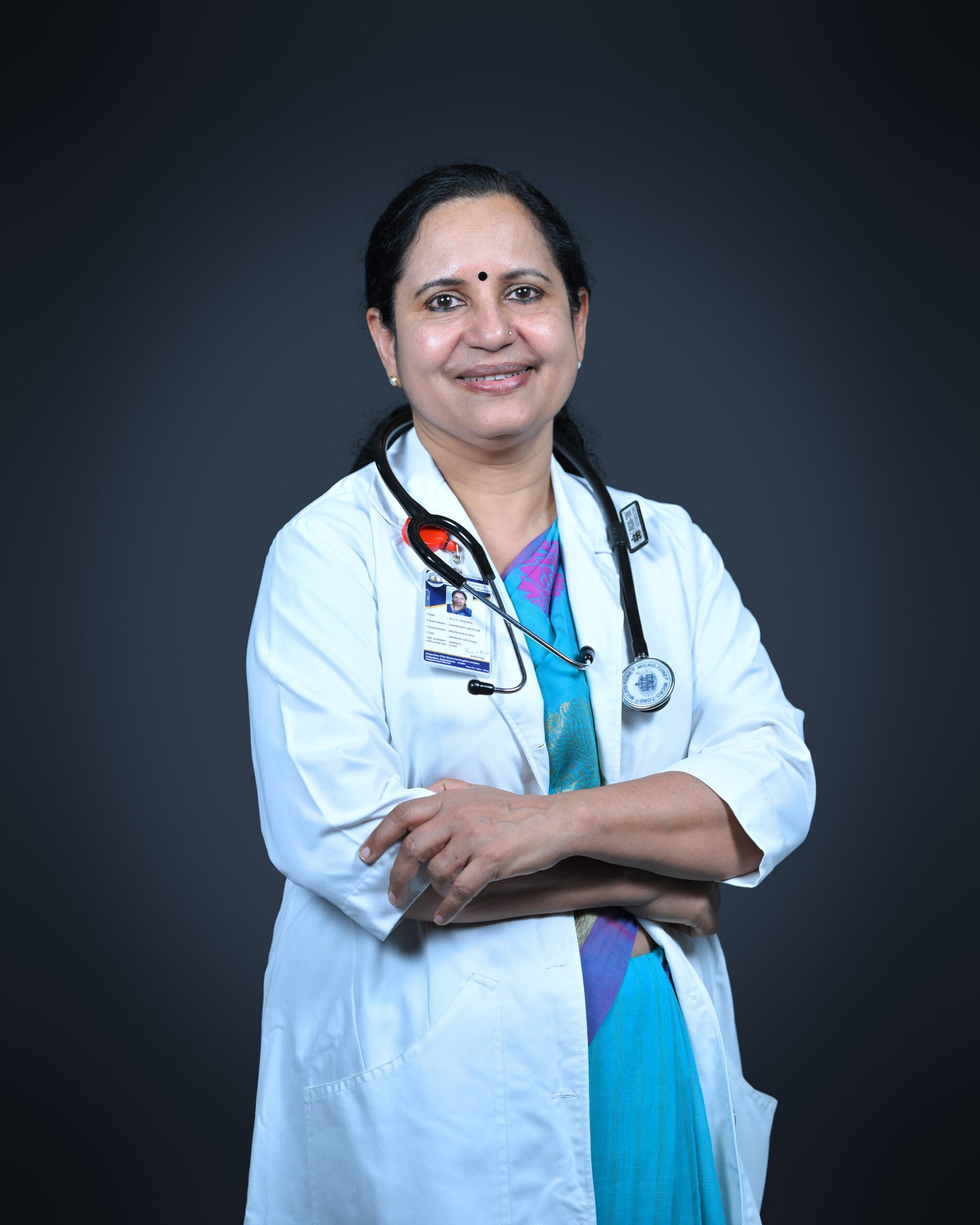
Dr. C.S. Jayasree
MBBS, MD
Professor & HOD
Overview
The Community Medicine Department facilitates learning to ensure learners attain CBME competencies, emphasizing preventive, promotive, and rehabilitative care. Key focus areas include epidemiology, biostatistics, research methodology, environmental and occupational health, primary health care, communicable and non-communicable diseases, vulnerable groups, and National Health Programs. Activities like field visits, family adoption and follow-up, health education, capacity building, and health camps provide hands-on experience in identifying community health problems and proposing solutions. The department works closely with local self-government and government health institutions. Postgraduates support undergraduate training and are prepared for roles as public health specialists, epidemiologists, program managers, policy advisors, faculty, and researchers. The objectives emphasize prevention-focused care and social accountability.
Overview
The Community Medicine Department facilitates learning to ensure learners attain CBME competencies, emphasizing preventive, promotive, and rehabilitative care. Key focus areas include epidemiology, biostatistics, research methodology, environmental and occupational health, primary health care, communicable and non-communicable diseases, vulnerable groups, and National Health Programs. Activities like field visits, family adoption and follow-up, health education, capacity building, and health camps provide hands-on experience in identifying community health problems and proposing solutions. The department works closely with local self-government and government health institutions. Postgraduates support undergraduate training and are prepared for roles as public health specialists, epidemiologists, program managers, policy advisors, faculty, and researchers. The objectives emphasize prevention-focused care and social accountability.
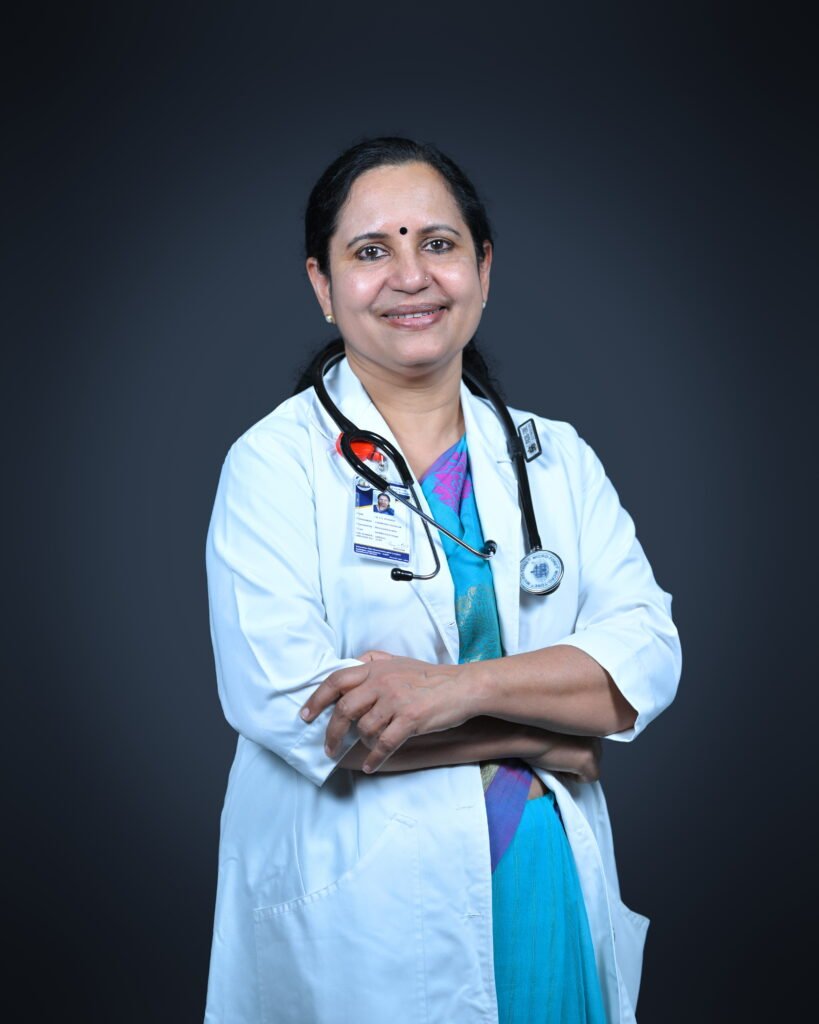
Dr. C.S. Jayasree
MBBS, MD
Professor & HOD
Overview
The Community Medicine Department facilitates learning to ensure learners attain CBME competencies, emphasizing preventive, promotive, and rehabilitative care. Key focus areas include epidemiology, biostatistics, research methodology, environmental and occupational health, primary health care, communicable and non-communicable diseases, vulnerable groups, and National Health Programs. Activities like field visits, family adoption and follow-up, health education, capacity building, and health camps provide hands-on experience in identifying community health problems and proposing solutions. The department works closely with local self-government and government health institutions. Postgraduates support undergraduate training and are prepared for roles as public health specialists, epidemiologists, program managers, policy advisors, faculty, and researchers. The objectives emphasize prevention-focused care and social accountability.
Dr. C.S. Jayasree
MBBS, MD . Professor & HOD
Professor & HOD
Mission
To develop socially accountable medical graduates with strong competencies in community-oriented and preventive healthcare. To promote excellence in public health education, research, and field-based learning aligned with national health priorities.
Contact Information
Email id:
communitymedicine@sreemookambikainstitute.com
Faculties
| S.No | Name | Designation |
|---|---|---|
| 1 | Dr. Jayasree C S | Professor |
| 2 | Dr. Vishnu G Ashok | Professor |
| 3 | Dr. Maneksh Kumar Nesamony | Associate Professor |
| 4 | Dr. Antoney Unni Xavier | Associate Professor |
| 5 | Dr. Priya Ravindra Panicker | Associate Professor |
| 6 | Dr. Prem Jerusha J D | Assistant Professor |
| 7 | Dr. Vaisakh G T | Assistant Professor |
| 8 | Dr. Arathi Raj S B | Assistant Professor |
| 9 | Dr. Shagirunisha Rizvana | Senior Resident |
| 10 | Dr. Ashmicaa Nair N | Senior Resident |
| 11 | Dr. Liji Anna Varghese | Statistician |
| 12 | Dr. Sakthipriya Gnanakrishnamoorthi | Tutor |
| 13 | Dr. Parvana S Vinod | Tutor |
| 14 | Dr. Soalvell S M | Tutor |
| 15 | Dr. Gishnu Prasad | Tutor |
| 16 | Dr. Angel V Rajan | Tutor |
| 17 | Dr. Achsah I G | Tutor |
| 18 | Dr. Vyshali Gnanavel | Tutor |
Introduction to Community Medicine
Community Medicine is an essential branch of medical science that focuses on the health of populations rather than individuals. It emphasizes health promotion, disease prevention, and improving the overall well-being of communities. The course is designed to equip medical students with the knowledge and skills required to function effectively as community physicians and public health leaders, both nationally and globally.
Goals and Focus of the Department
The primary goal of the department is to develop competent medical graduates who can efficiently serve the community. It aims to prepare students to address public health challenges, understand community health needs, and contribute to improving healthcare systems. The focus is on producing professionals capable of working in diverse environments and promoting health at both local and global levels.
Objectives of Studying Community Medicine
The study of Community Medicine enables students to understand the concepts of health and disease, along with levels of prevention and intervention strategies. It provides knowledge of epidemiological methods to study and control communicable and non-communicable diseases. Students learn about vital statistics, data collection, and biostatistical analysis to interpret health information. The subject also covers demographic patterns, maternal and child health, family planning, nutrition, and environmental health factors such as sanitation and occupational hazards. Additionally, students are trained in national health programs, primary healthcare systems, and effective health communication to bring behavioral changes in the community.
Facilities and Infrastructure
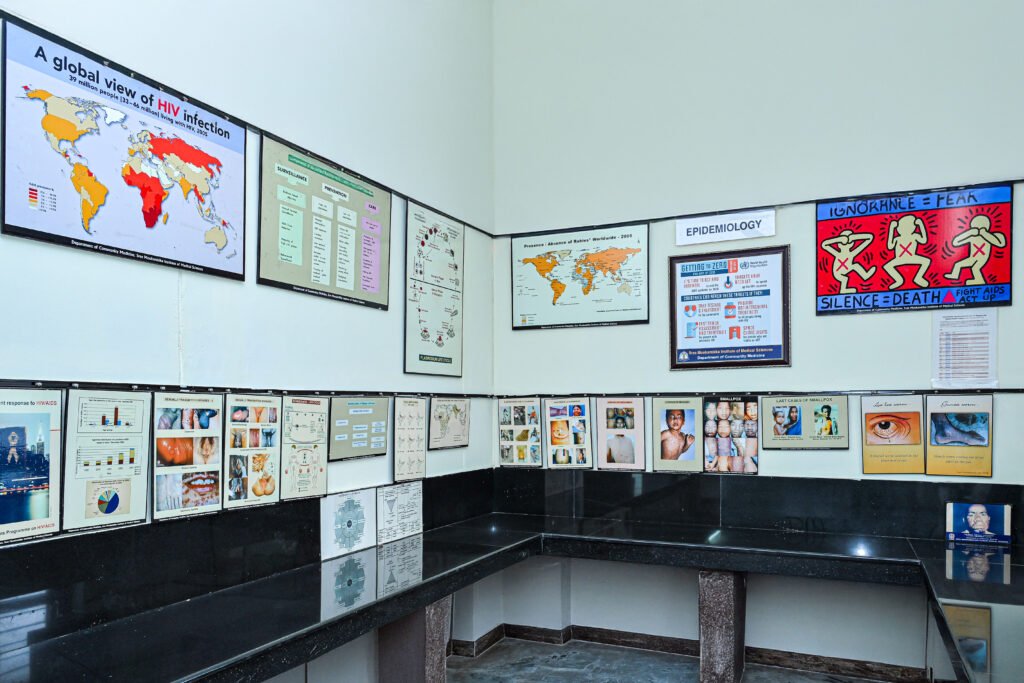
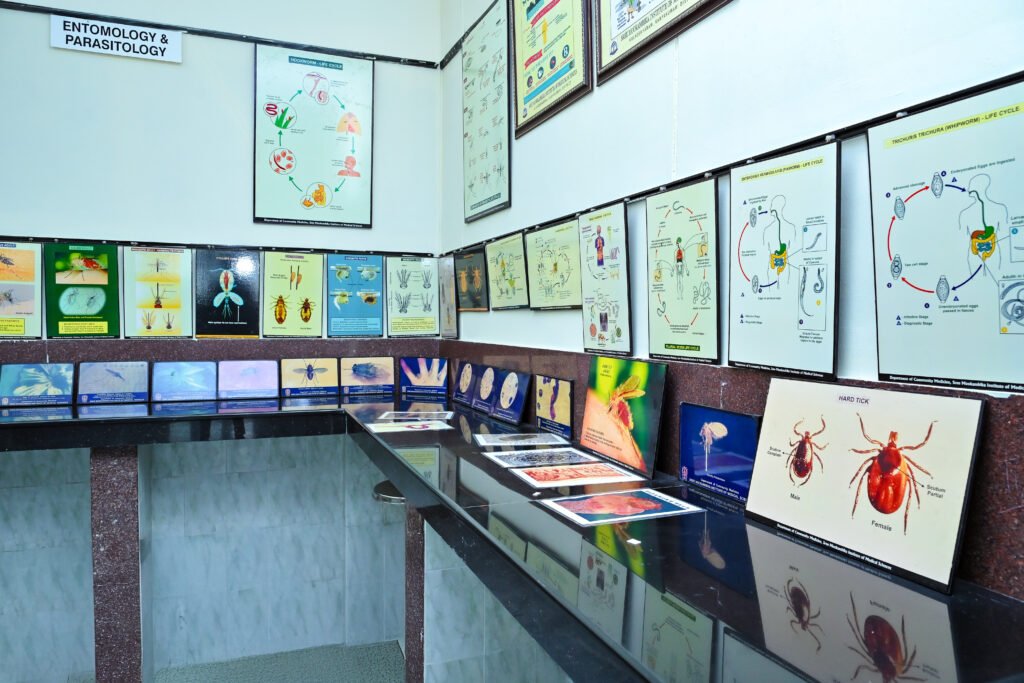
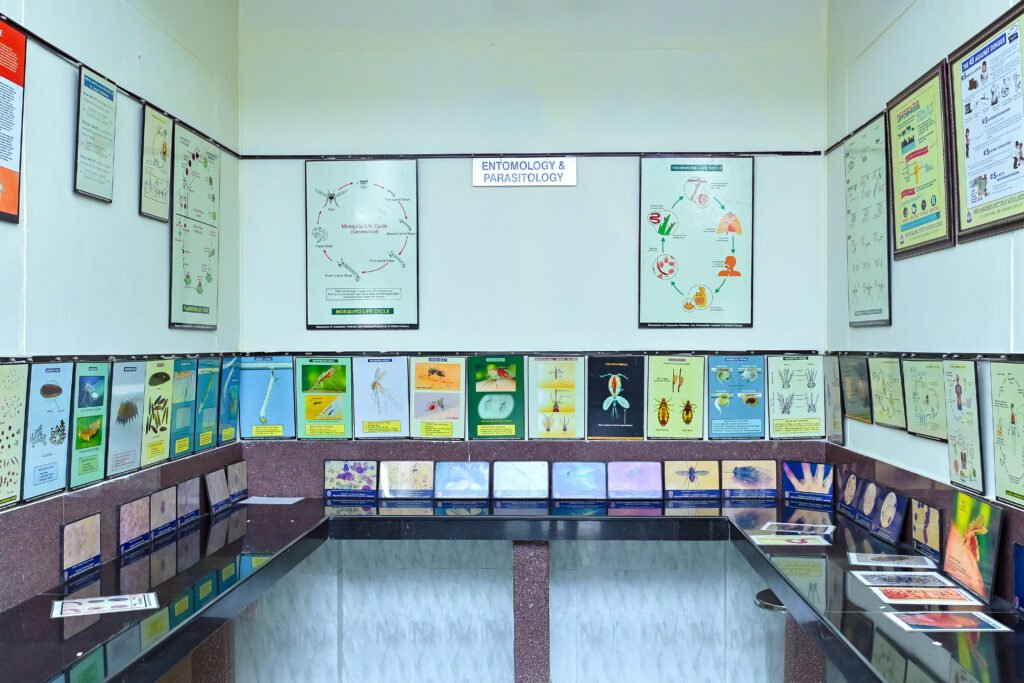
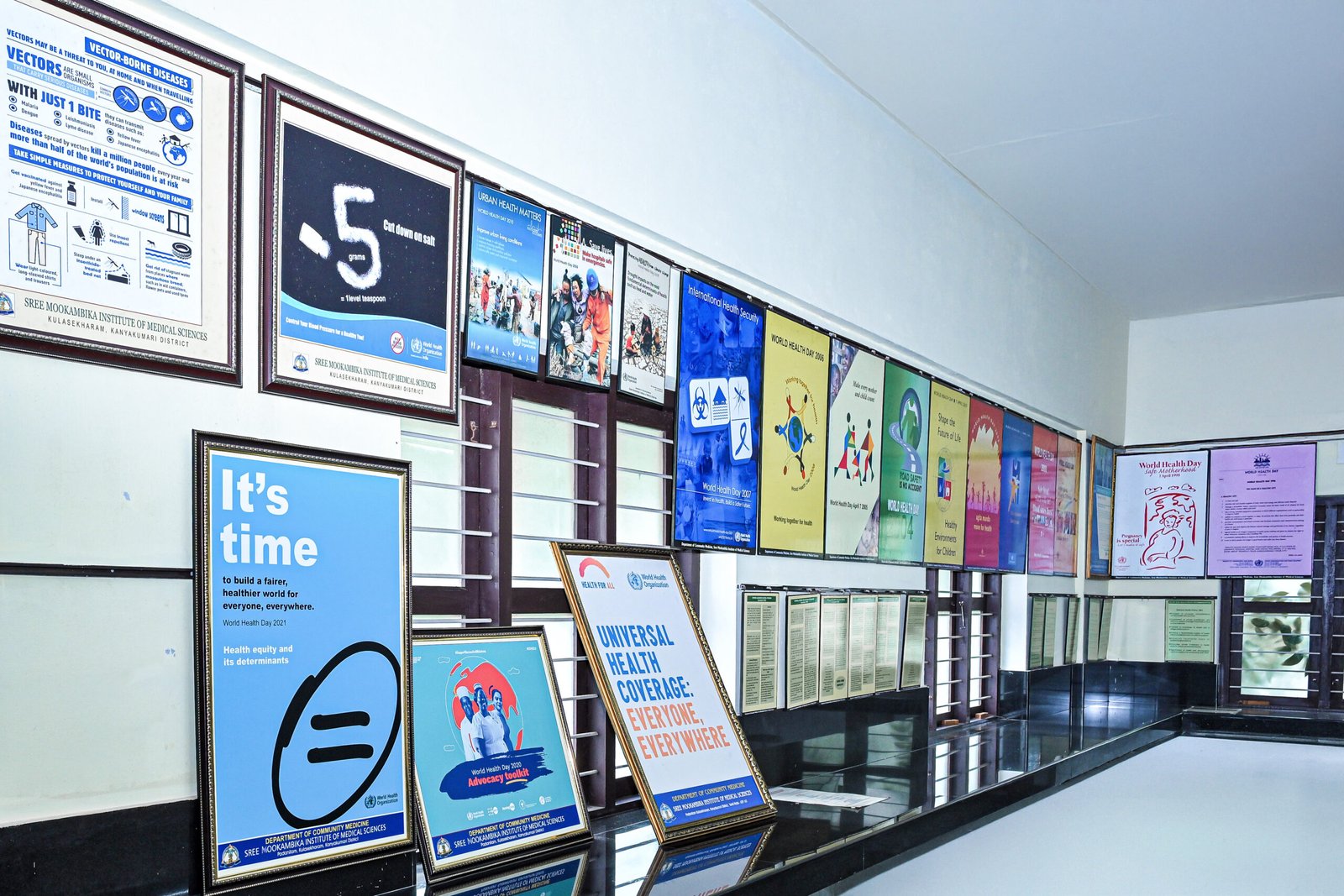
The department is supported by well-established facilities that enhance both teaching and practical training. These include rural and urban health centers where students gain field experience, as well as on-campus infrastructure such as demonstration rooms, laboratories with microscopes and learning tools, and museums displaying models and public health materials. Additional resources like departmental libraries, seminar rooms, and research laboratories provide a comprehensive academic environment for learning and research activities.
Teaching Programme and Field Training
The teaching program is structured to include both theoretical and practical components throughout the medical course. Students are trained through lectures, demonstrations, tutorials, and seminars across multiple semesters. Field training plays a crucial role, with students participating in rural and urban health postings, community surveys, and health education activities. They also visit healthcare institutions, laboratories, and public health facilities to gain real-world exposure. Internship training further strengthens their skills through hands-on experience in primary health centers, immunization clinics, and national health programs.
Community-Based Learning and Public Health Practice
A key aspect of Community Medicine is community-based learning, where students actively engage with populations to understand health determinants and risk factors. They are trained to promote healthy lifestyles, encourage community participation, and raise awareness about immunization, hygiene, and disease prevention. The course also emphasizes collaboration with healthcare teams and stakeholders to address health inequalities and improve access to care, especially for underserved populations.
Conclusion
Community Medicine plays a vital role in medical education by bridging the gap between clinical practice and public health. It prepares students to address real-world health challenges, implement preventive strategies, and improve the quality of life in communities. By combining theoretical knowledge with field experience, it lays the foundation for effective healthcare delivery and public health leadership.
➤ Focuses on CBME-based training emphasizing preventive, promotive, and rehabilitative healthcare.
➤ Covers epidemiology, biostatistics, research methodology, environmental and occupational health, primary healthcare, and national health programs.
➤ Provides practical exposure through field visits, family adoption and follow-up, health education activities, capacity building of healthcare workers, and periodic health camps.
➤ Encourages identification of community health problems, data analysis, and evidence-based solutions.
➤ Maintains close collaboration with local government bodies and public health institutions.
➤ Postgraduates assist in undergraduate teaching and are trained as public health specialists, epidemiologists, health program managers, policy advisors, academic faculty, and researchers.
➤ Well-equipped with lecture halls, laboratories, demonstration rooms, library, seminar rooms, museum, faculty offices, and dedicated Rural and Urban Health Training Centers.
➤ Conducts research including ICMR projects, workshops on research methodology, observance of health days, and expert guest lectures.
➤ Postgraduates attend CMEs and workshops, achieving recognition and awards for presentations, posters, and quiz competitions.
1. SPECIALITY SERVICES
Research work including ICMR studies
2. POST GRADUATE PROGRAMMES/ FELLOWSHIPS
2 seats per year for M.D Community Medicine.
3. CMEs, CONFERENCES, WORKSHOPS, SEMINARS DONE IN THE DEPARTMENT
Problem Solving Research Methodology workshop, observation of important health days with various activities, guest lectures by distinguished personalities experienced in crucial areas etc.
4. MERITS AND OTHER ACHIEVEMENTS
Postgraduates participate regularly in CMEs and workshops conducted inside and outside the state and have won prizes for oral presentations, posters, quiz competitions etc.