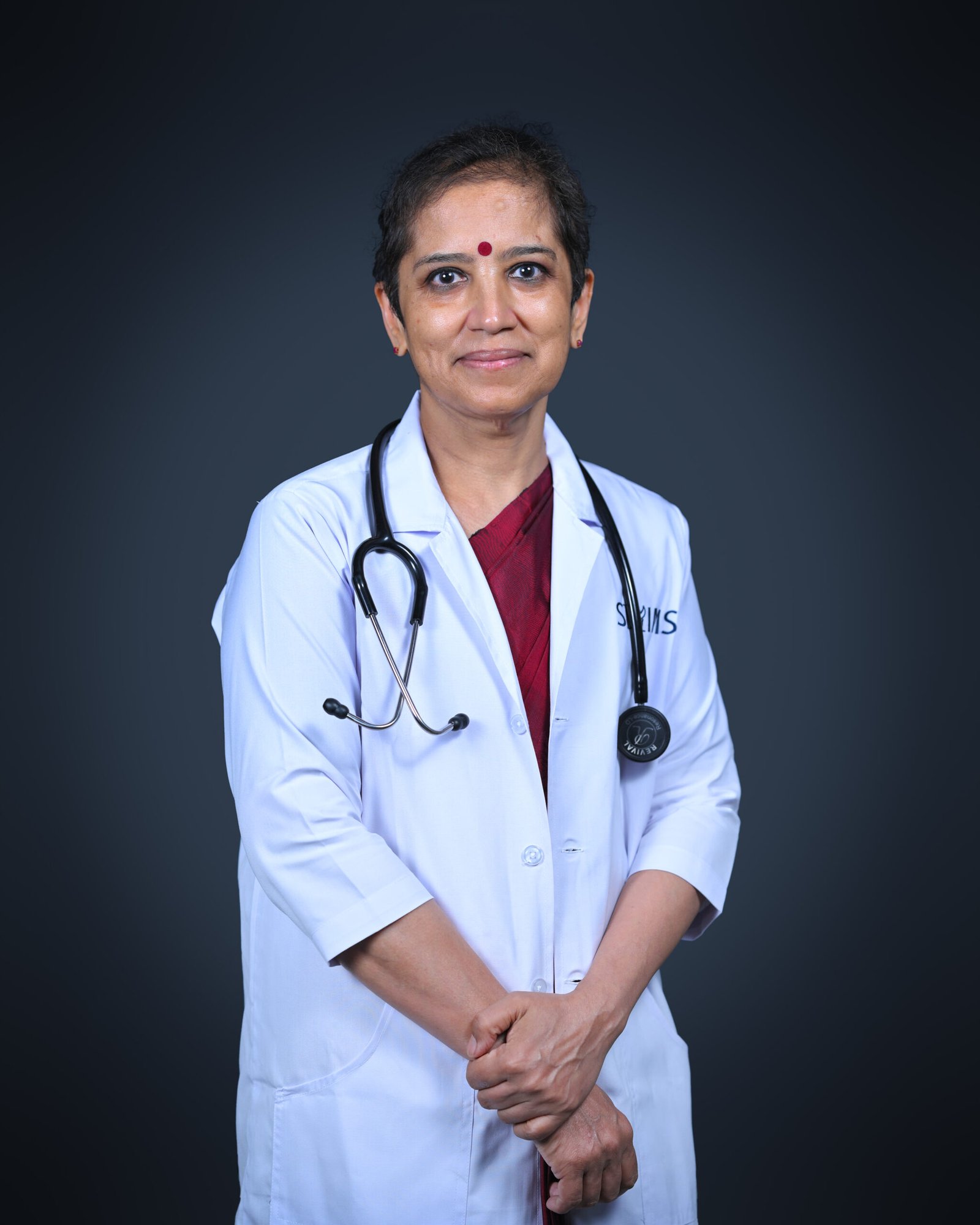
Dr Beena Unnikrishnan
MD ,DM ,DNB
Overview
The Department of Nephrology at Sree Mookambika Institute of Medical Sciences provides comprehensive care for patients with acute and chronic kidney diseases through advanced diagnostics, renal replacement therapies, and multidisciplinary clinical management. The department achieved a significant milestone by performing the first renal transplant in Kanyakumari district, establishing SMIMS as a major centre for advanced kidney care in the region. The department is supported by a highly experienced team of nephrologists, medical officers, dialysis technicians, dialysis nurses, and trained support staff who work together to ensure safe and effective kidney care. With a strong emphasis on patient safety, infection control, and quality standards, the unit has emerged as one of the major centres for renal care in South Tamil Nadu. Recognized under the Tamil Nadu Chief Minister’s Comprehensive Health Insurance Scheme (TNCMCHIS), the department provides affordable and accessible treatment to a large number of patients from across the region.
Dr Beena Unnikrishnan
MD ,DM ,DNB
Overview
The Department of Nephrology at Sree Mookambika Institute of Medical Sciences provides comprehensive care for patients with acute and chronic kidney diseases through advanced diagnostics, renal replacement therapies, and multidisciplinary clinical management. The department achieved a significant milestone by performing the first renal transplant in Kanyakumari district, establishing SMIMS as a major centre for advanced kidney care in the region. The department is supported by a highly experienced team of nephrologists, medical officers, dialysis technicians, dialysis nurses, and trained support staff who work together to ensure safe and effective kidney care. With a strong emphasis on patient safety, infection control, and quality standards, the unit has emerged as one of the major centres for renal care in South Tamil Nadu. Recognized under the Tamil Nadu Chief Minister’s Comprehensive Health Insurance Scheme (TNCMCHIS), the department provides affordable and accessible treatment to a large number of patients from across the region.
Contact Information
Email id:
nephrology@sreemookambikainstitute.com
Overview
The Department of Nephrology at Sree Mookambika Institute of Medical Sciences provides comprehensive care for patients with acute and chronic kidney diseases through advanced diagnostics, renal replacement therapies, and multidisciplinary clinical management. The department achieved a significant milestone by performing the first renal transplant in Kanyakumari district, establishing SMIMS as a major centre for advanced kidney care in the region. The department is supported by a highly experienced team of nephrologists, medical officers, dialysis technicians, dialysis nurses, and trained support staff who work together to ensure safe and effective kidney care. With a strong emphasis on patient safety, infection control, and quality standards, the unit has emerged as one of the major centres for renal care in South Tamil Nadu. Recognized under the Tamil Nadu Chief Minister’s Comprehensive Health Insurance Scheme (TNCMCHIS), the department provides affordable and accessible treatment to a large number of patients from across the region.
Dialysis Services
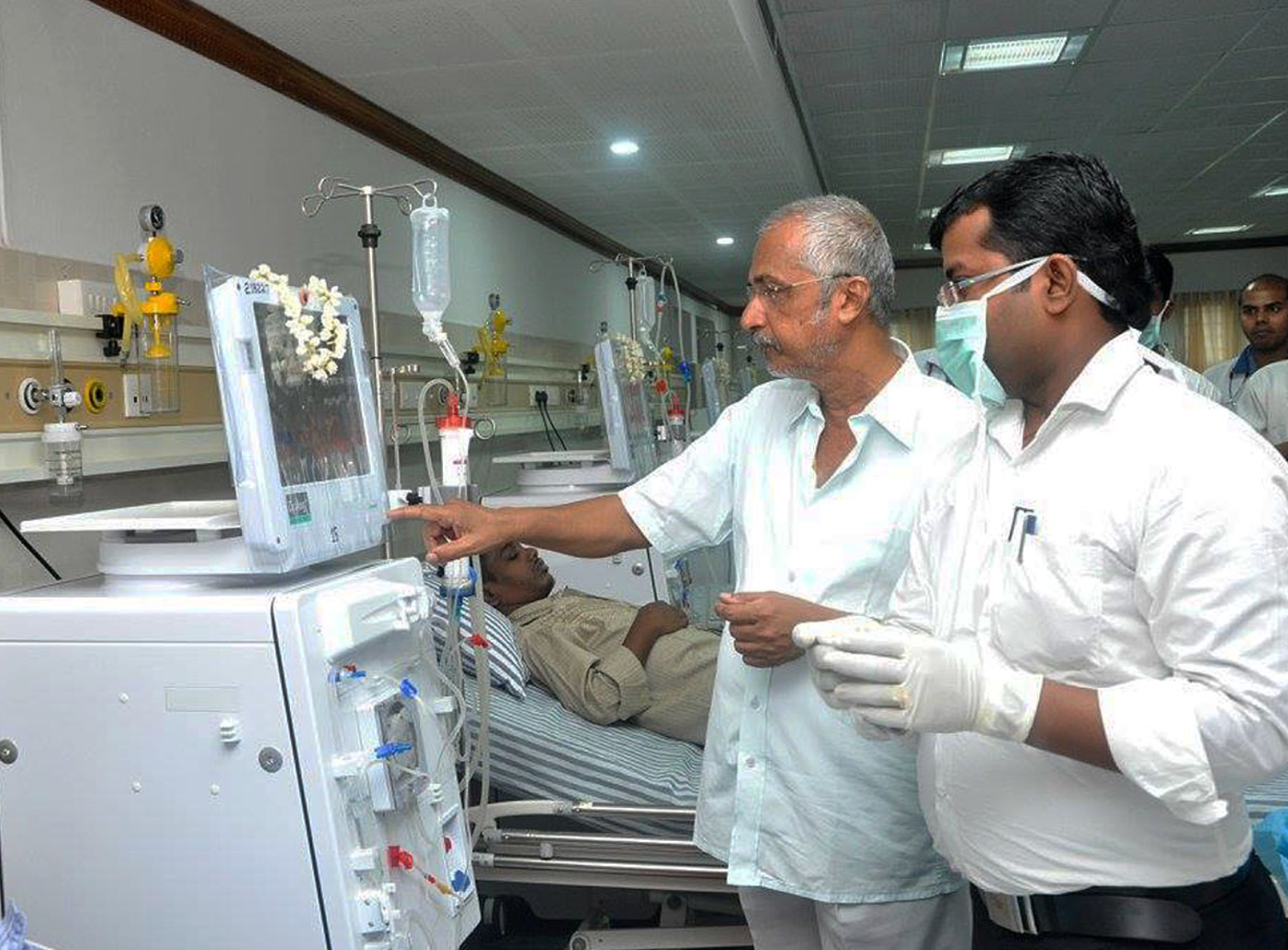
The haemodialysis unit at SMIMS is one of the largest dialysis facilities in the region, delivering reliable and continuous renal replacement therapy for both outpatient and inpatient populations.
Key features of the dialysis unit include:
- 25 modern haemodialysis machines
- Separate dialysis areas for serology-positive and serology-negative patients to maintain strict infection control standards
- Two central Reverse Osmosis (RO) plants and a portable RO system ensuring high-quality dialysis water
- Dialysis services functioning in four shifts per day
- Approximately 1,800 – 2,500 dialysis sessions performed every month
Dialysis services are available 24 hours a day, supporting patients admitted in medical wards, intensive care units, and the emergency department.
Advanced Dialysis Procedures
The department routinely performs specialized renal replacement therapies including:
- Conventional haemodialysis
- Heparin-free haemodialysis for patients with bleeding risk
- Slow Low Efficiency Dialysis (SLED) for critically ill patients
- Charcoal haemoperfusion for toxin and drug removal
- Plasmapheresis for selected immune-mediated renal diseases
Dialyser reuse is performed using automated dialyser reprocessing systems, following strict safety protocols and fibre bundle volume standards.
Renal Transplant Programme
The department initiated its live-related donor renal transplantation programme in 2017, marking an important milestone in advanced renal care at SMIMS.
Since its inception, kidney transplantation has been performed regularly with good clinical outcomes. The programme is designed to remain financially accessible, allowing patients from economically disadvantaged backgrounds to benefit from life-saving transplant surgery.
Renal transplantation is supported by a multidisciplinary team involving nephrologists, transplant surgeons, anaesthesiologists, intensivists, and transplant coordinators, ensuring comprehensive perioperative and long-term care.
Emergency and Critical Care Renal Support
The nephrology team provides continuous renal support to patients across the hospital including:
- Emergency dialysis for acute kidney injury
- Renal care for critically ill patients in ICUs
- Dialysis support for poisoning and toxin removal
- Management of complex electrolyte and metabolic disorders
Academic Activities
As part of a teaching medical institution, the Department of Nephrology actively contributes to undergraduate, postgraduate, and allied health sciences education.
The department is involved in the clinical training of MD General Medicine postgraduate residents, providing exposure to the diagnosis and management of acute and chronic kidney diseases, dialysis procedures, and transplant care.
The department also supports the B.Sc Dialysis Technology program, offering hands-on training in haemodialysis procedures, dialysis machine operation, water treatment systems, infection control practices, and patient monitoring.
In addition, MBBS students receive clinical exposure through bedside teaching, case discussions, and demonstrations of nephrology procedures.
Regular academic seminars, journal clubs, case presentations, and continuing medical education programs are conducted to promote academic excellence and evidence-based clinical practice.