Dr. R. Nepoleon
MBBS, MD . Professor & HOD
Overview
Our Microbiology Department plays an important role in medical education by teaching students about microorganisms, infectious diseases, and laboratory techniques. It helps develop the knowledge and practical skills required for accurate diagnosis and patient care. The department supports clinicians by providing reliable laboratory services for the detection and identification of infectious agents. These services assist in selecting appropriate treatment and monitoring disease progression. It also contributes to infection prevention by identifying sources of infection and patterns of antimicrobial resistance. Through routine testing and surveillance, the department supports public health activities in the community. It assists in the early detection of outbreaks and emerging infections. Overall, the department contributes significantly to education, patient care, and community health.
Overview
Our Microbiology Department plays an important role in medical education by teaching students about microorganisms, infectious diseases, and laboratory techniques. It helps develop the knowledge and practical skills required for accurate diagnosis and patient care. The department supports clinicians by providing reliable laboratory services for the detection and identification of infectious agents. These services assist in selecting appropriate treatment and monitoring disease progression. It also contributes to infection prevention by identifying sources of infection and patterns of antimicrobial resistance. Through routine testing and surveillance, the department supports public health activities in the community. It assists in the early detection of outbreaks and emerging infections. Overall, the department contributes significantly to education, patient care, and community health.

Dr. R. Nepoleon
MBBS, MD . Professor & HOD
Overview
Our Microbiology Department plays an important role in medical education by teaching students about microorganisms, infectious diseases, and laboratory techniques. It helps develop the knowledge and practical skills required for accurate diagnosis and patient care. The department supports clinicians by providing reliable laboratory services for the detection and identification of infectious agents. These services assist in selecting appropriate treatment and monitoring disease progression. It also contributes to infection prevention by identifying sources of infection and patterns of antimicrobial resistance. Through routine testing and surveillance, the department supports public health activities in the community. It assists in the early detection of outbreaks and emerging infections. Overall, the department contributes significantly to education, patient care, and community health.
Dr. R. Nepoleon
MBBS, MD . Professor & HOD
Professor & HOD
Mission
The mission of the Microbiology Department is to provide quality education and accurate diagnostic services in infectious diseases to support effective patient care. It promotes safe clinical practices, infection control, and public health through disease surveillance and prevention.
Faculties
| S.No | Name | Designation |
|---|---|---|
| 1 | Dr. Nepoleon | Professor |
| 2 | Dr. Beena Paul | Professor |
| 3 | Dr. Palaniappan N | Professor |
| 4 | Dr. Sreeja Nair | Associate Professor |
| 5 | Dr. Greesh Karunakaran | Associate Professor |
| 6 | Dr. N S Ravichandran | Assistant Professor |
| 7 | Dr. Jasmine Gnana Sutha John Kingsly | Senior Resident |
| 8 | Dr. Shiny Raja | Senior Resident |
| 9 | Dr. Haarish Kanna | Tutor |
| 10 | Dr. Ani Shibana Maria Silvaster | Tutor |
| 11 | Dr. Junu Vijay V S | Tutor |
| 12 | Dr. Sreejisha M | Tutor |
Introduction to Microbiology
Microbiology is a vital branch of medical science that deals with the study of microorganisms such as bacteria, viruses, fungi, and parasites, and their role in human health and disease. The Department of Microbiology plays an important role in diagnosing infectious diseases and supporting patient care. It provides essential laboratory services to the hospital and contributes to maintaining public health through various diagnostic and surveillance activities.
Role and Functions of the Department
The department is actively involved in diagnosing infectious diseases prevalent in society through advanced laboratory techniques. It performs bacteriological analysis of water, ensures operation theatre sterility, conducts disinfectant testing, and carries out hospital environmental surveillance. The department also participates in national health programs such as tuberculosis control and contributes to infection control practices, antibiotic policy formulation, and biomedical waste management within the hospital.
Objectives of Studying Microbiology
The primary objective of studying microbiology is to help students understand microorganisms and their impact on human health. It equips them with knowledge to identify disease-causing organisms, understand their mode of transmission, and apply laboratory methods for diagnosis. Students also learn infection control measures and the rational use of antibiotics, which are essential for preventing and managing infectious diseases in clinical practice.
Facilities and Laboratory Infrastructure
The department is well-equipped with modern infrastructure to support both teaching and diagnostic services. It includes lecture halls and demonstration rooms with audiovisual aids, as well as practical laboratories with microscopes and advanced equipment. The diagnostic laboratory features automated systems for blood culture, biosafety cabinets, and other instruments required for accurate microbial analysis.
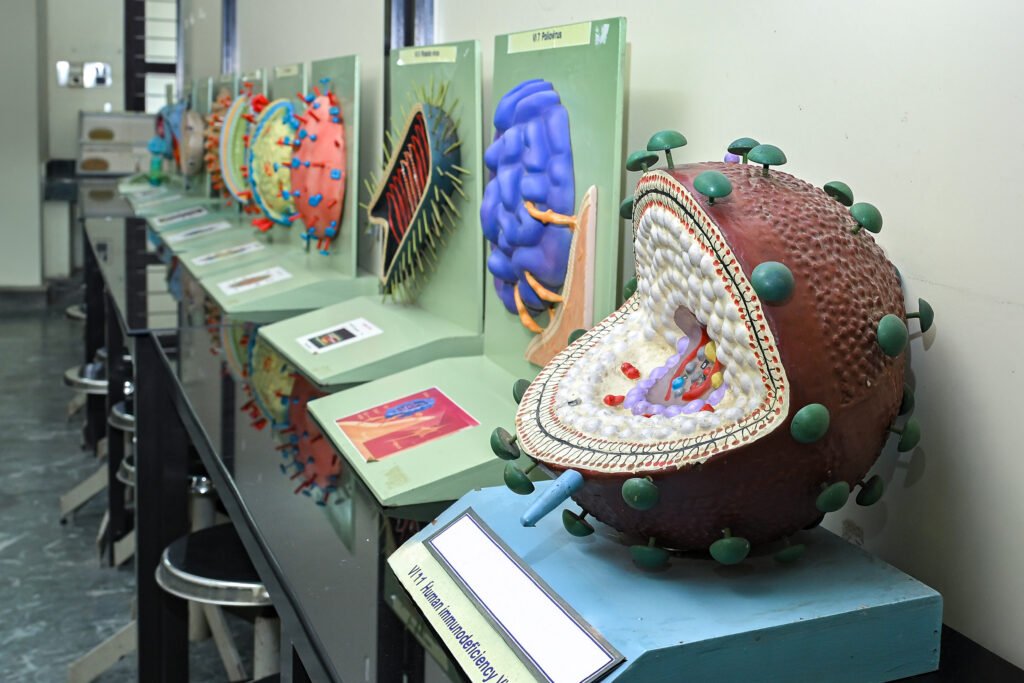
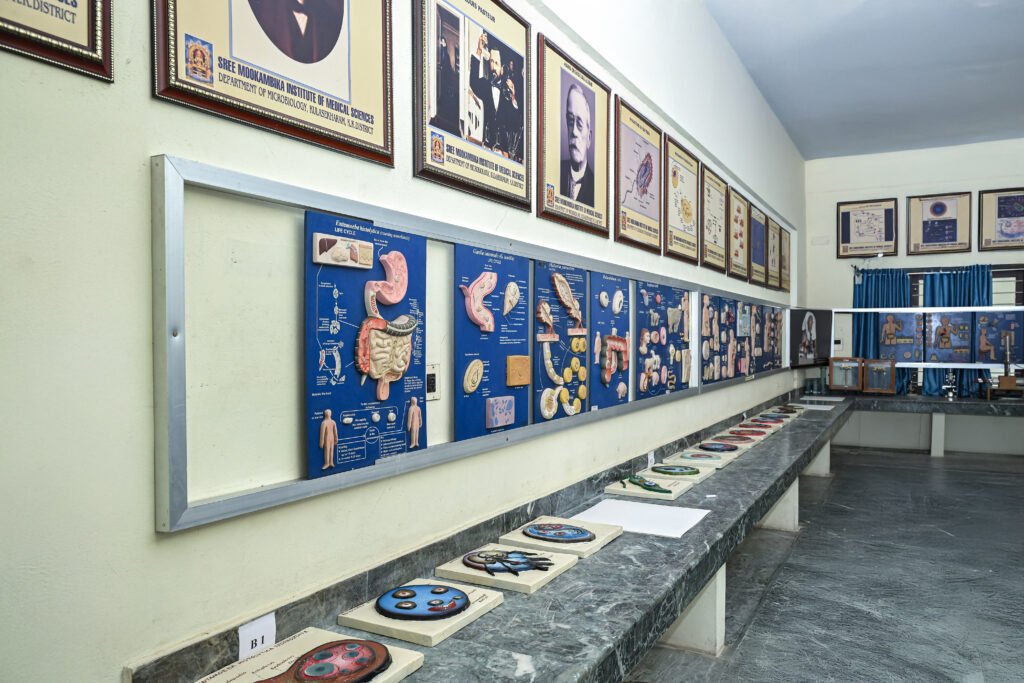
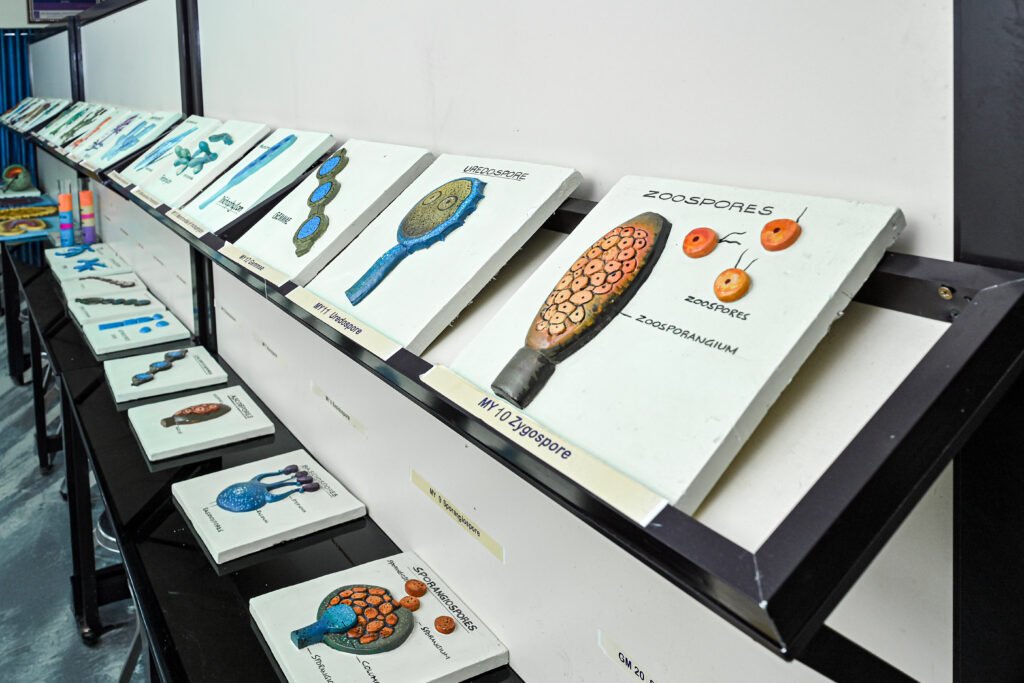
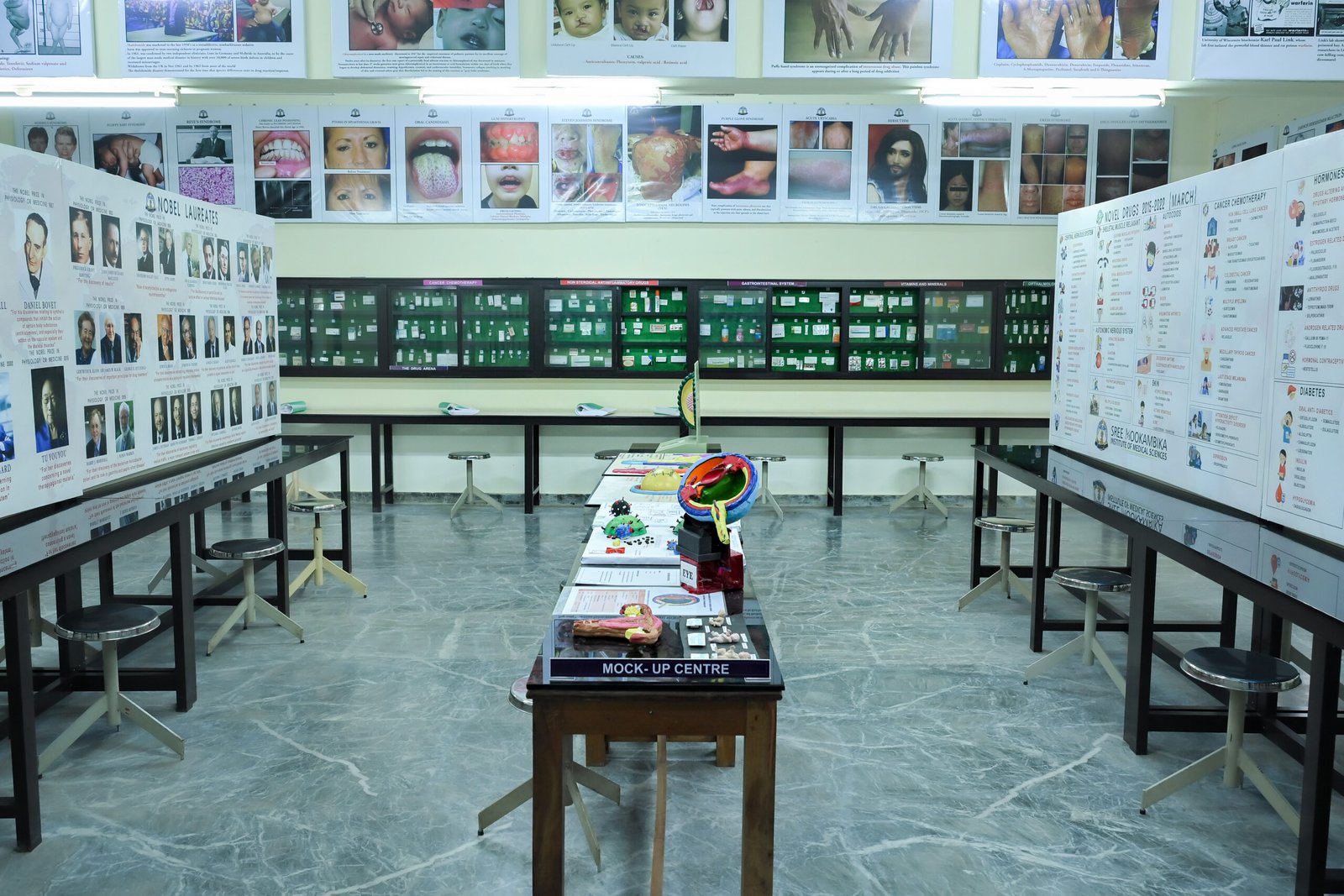
Additional facilities include a museum with models and charts for better understanding, and a postgraduate section with advanced tools such as laminar flow units, fluorescent microscopes, PCR equipment, and research laboratories. These resources create a comprehensive learning and research environment for students.
Academic and Training Programme
The department provides structured academic training for undergraduate and postgraduate students. Undergraduate teaching includes theory classes, practical sessions, and integrated learning approaches that combine microbiology with other medical subjects. Students are trained in laboratory techniques and diagnostic procedures, helping them gain practical skills.
Postgraduate programs offer advanced training, research opportunities, and specialization in microbiology. The department was recognized as a postgraduate training center, further enhancing its academic strength and contribution to medical education.
Research and Public Health Contribution
Research is an integral part of the department, with faculty and students involved in studies related to infectious diseases and microbiological advancements. The department also plays a significant role in public health by supporting infection control programs, monitoring hospital environments, and contributing to disease prevention strategies. These activities help improve patient safety and healthcare quality.
Conclusion
Microbiology is a crucial subject in medical education that provides essential knowledge about infectious diseases and their management. By combining theoretical learning with practical laboratory experience, it prepares students to diagnose, prevent, and control infections effectively. The department thus plays a key role in both healthcare delivery and public health improvement.
1. SPECIALITY SERVICES
Hospital infection control activities are carried out through the Hospital Infection Control Committee, which conducts periodic training programs and surveillance to prevent and control hospital-acquired infections.
The department actively participates in antibiotic policy formulation to promote the rational use of antimicrobials.
It also plays an important role in biomedical waste management to ensure safe handling, segregation, and disposal in compliance with regulatory guidelines.
2.PROCEDURE
The department is equipped with advanced laboratory facilities, including an automated blood culture system, VITEK automated culture system, automated analyzers, chemiluminescence analyzer, and PCR equipment, all of which are available and functioning regularly.
Hospital infection control activities are carried out through the Hospital Infection Control Committee, which conducts periodic training and surveillance to prevent and control hospital-acquired infections.
The department is actively involved in antibiotic policy formulation to ensure the rational and effective use of antimicrobial agents.
It also plays a significant role in biomedical waste management, ensuring proper segregation, handling, and disposal in accordance with established guidelines.
3. POST GRADUATE PROGRAMMES/ FELLOWSHIPS
4. CMEs, CONFERENCES, WORKSHOPS, SEMINARS DONE IN THE DEPARTMENT
- The department regularly conducts Continuing Medical Education programs and participates as guest faculty in interdepartmental CME sessions.
- It also organizes orientation programs for CMRI to create awareness about the available laboratory services.
5. MERITS AND OTHER ACHIEVEMENTS