1.Skills Lab – Sree Mookambika Institute of Medical Sciences (SMIMS)
The Skills Lab at Sree Mookambika Institute of Medical Sciences is a state-of-the-art, centralized facility dedicated to medical simulation–based education. Established in 2018 in accordance with National Medical Council recommendations, the lab caters to the simulation training needs of undergraduate and postgraduate students from the medical, dental, and nursing colleges under the Sree Mookambika Institutes. Since its inception, the Skills Lab has remained highly active in fulfilling its mandate of delivering high-quality, simulation-based healthcare education.
2. Centre of Excellence in Medical Simulation
3. Advanced Simulation-Based Learning
4. Flexible Simulation Environments
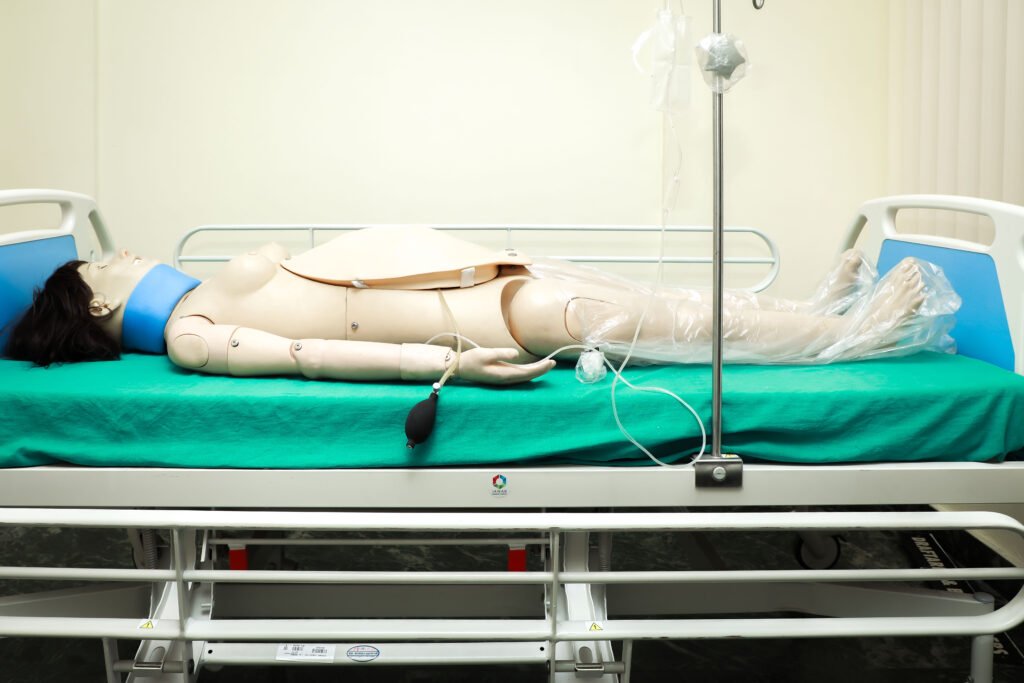
The simulation suite can be rapidly transformed into various clinical settings, including:
- Emergency/Casualty room
- General ward
- Intensive Care Unit (ICU)
- Maternity unit
- Operating theatre
- General practice environment
This flexibility ensures comprehensive exposure across disciplines. Integrated teaching enables pre-clinical and para-clinical students to connect theoretical knowledge with practical clinical application. Typically, large-group lectures are followed by small-group, hands-on skill training sessions in the Skills Lab.
Integrated Teaching and Training by MBBS Phase
Skills Lab – Sree Mookambika Institute of Medical Sciences (SMIMS)
The Skills Lab at Sree Mookambika Institute of Medical Sciences is a state-of-the-art, centralized facility dedicated to medical simulation–based education. Established in 2018 in accordance with National Medical Council recommendations, the lab caters to the simulation training needs of undergraduate and postgraduate students from the medical, dental, and nursing colleges under the Sree Mookambika Institutes. Since its inception, the Skills Lab has remained highly active in fulfilling its mandate of delivering high-quality, simulation-based healthcare education.
Centre of Excellence in Medical Simulation:
The Skills Lab functions as an inter-professional Centre of Excellence, leveraging advanced medical simulation to enhance the competence of healthcare professionals through education, evaluation, and innovation. By providing a safe, controlled, and realistic learning environment, the lab plays a vital role in improving patient safety and the overall quality of clinical care.
Advanced Simulation-Based Learning:
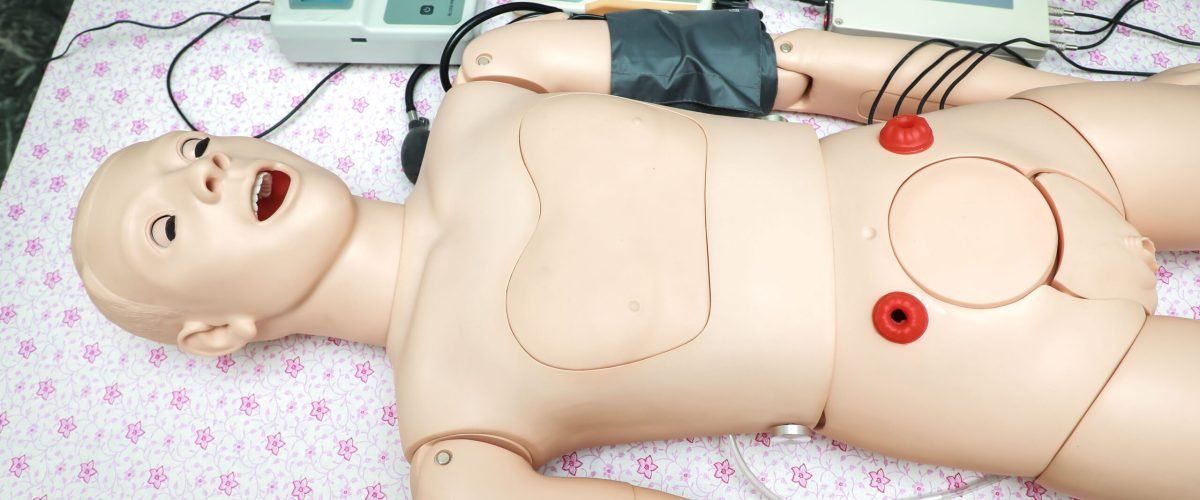
High-fidelity medical simulators can be programmed to replicate a wide range of clinical conditions and respond appropriately to interventions and medications. Real-time monitors display vital parameters, enabling learners to assess patient progress as they would in real clinical settings. This immersive approach allows healthcare professionals and students to practice routine procedures as well as manage rare and life-threatening emergencies—without any risk to patients or learners.
Flexible Simulation Environments:
The simulation suite can be rapidly transformed into various clinical settings, including:
- Emergency/Casualty room
- General ward
- Intensive Care Unit (ICU)
- Maternity unit
- Operating theatre
- General practice environment
This flexibility ensures comprehensive exposure across disciplines. Integrated teaching enables pre-clinical and para-clinical students to connect theoretical knowledge with practical clinical application. Typically, large-group lectures are followed by small-group, hands-on skill training sessions in the Skills Lab.
The Skills Lab at Sree Mookambika Institute of Medical Sciences is a state-of-the-art, centralized facility dedicated to medical simulation–based education. Established in 2018 in accordance with National Medical Council recommendations, the lab caters to the simulation training needs of undergraduate and postgraduate students from the medical, dental, and nursing colleges under the Sree Mookambika Institutes. Since its inception, the Skills Lab has remained highly active in fulfilling its mandate of delivering high-quality, simulation-based healthcare education.
Centre of Excellence in Medical Simulation
The Skills Lab functions as an inter-professional Centre of Excellence, leveraging advanced medical simulation to enhance the competence of healthcare professionals through education, evaluation, and innovation. By providing a safe, controlled, and realistic learning environment, the lab plays a vital role in improving patient safety and the overall quality of clinical care.
Advanced Simulation-Based Learning
High-fidelity medical simulators can be programmed to replicate a wide range of clinical conditions and respond appropriately to interventions and medications. Real-time monitors display vital parameters, enabling learners to assess patient progress as they would in real clinical settings. This immersive approach allows healthcare professionals and students to practice routine procedures as well as manage rare and life-threatening emergencies—without any risk to patients or learners.
Flexible Simulation Environments
The simulation suite can be rapidly transformed into various clinical settings, including:
- Emergency/Casualty room
- General ward
- Intensive Care Unit (ICU)
- Maternity unit
- Operating theatre
- General practice environment
This flexibility ensures comprehensive exposure across disciplines. Integrated teaching enables pre-clinical and para-clinical students to connect theoretical knowledge with practical clinical application. Typically, large-group lectures are followed by small-group, hands-on skill training sessions in the Skills Lab.
Integrated Teaching and Training by MBBS Phase
Phase I MBBS:
- Anatomy: Surface anatomy of upper and lower limbs, major joints, injection techniques, routes of drug administration, per vaginum and per rectum examinations, intravenous cannulation
- Physiology: Blood pressure measurement, auscultation of normal heart and lung sounds, recording of 12-lead ECG
- Community Medicine: CPR and First Aid, patient transport, universal precautions, and communication skills
Phase II MBBS:
- Pathology: Biopsy techniques for various organs
- General Medicine: Patient–doctor communication, history taking, and clinical examination of major organ systems through role play; recognition of abnormal heart and lung sounds using audio simulations
- Anaesthesiology: Basic Life Support (BLS) using infant, child, and adult CPR manikins
Phase III Part I MBBS:
- ENT: Otoscopic examination and identification of ear pathologies
- Ophthalmology: Fundus examination
- Surgery: Breast examination, digital rectal examination, proctoscopy, and trauma patient assessment
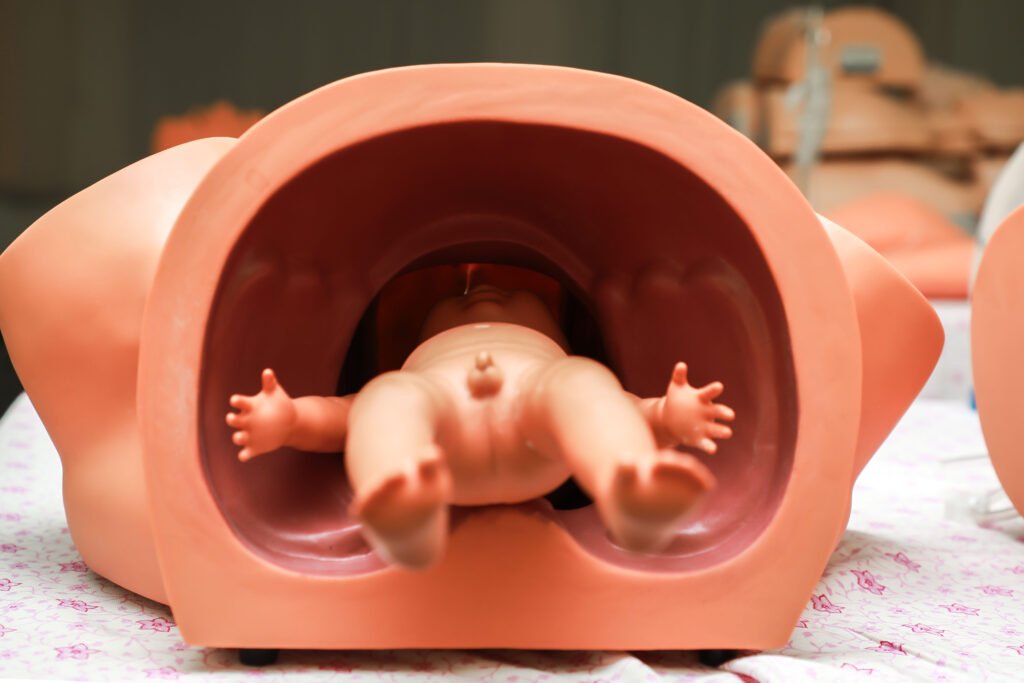
- Obstetrics: Conduct of normal delivery and detection of uterine and adnexal pathology on per vaginum examination
Phase III Part II MBBS
- Medicine: Auscultation of normal heart and lung sounds, lumbar puncture, and extensive training in recognition of common cardiac arrhythmias
- Surgery: Skin suturing, excision of swellings, incision and drainage, nasogastric tube placement, Foley’s catheterization, tracheostomy, cricothyrotomy, and intercostal drain insertion
- Obstetrics: Repair of episiotomy wounds
- Paediatrics: Newborn resuscitation, Advanced Cardiac Life Support (ACLS) for newborns and children, peripheral intravenous and umbilical vein cannulation
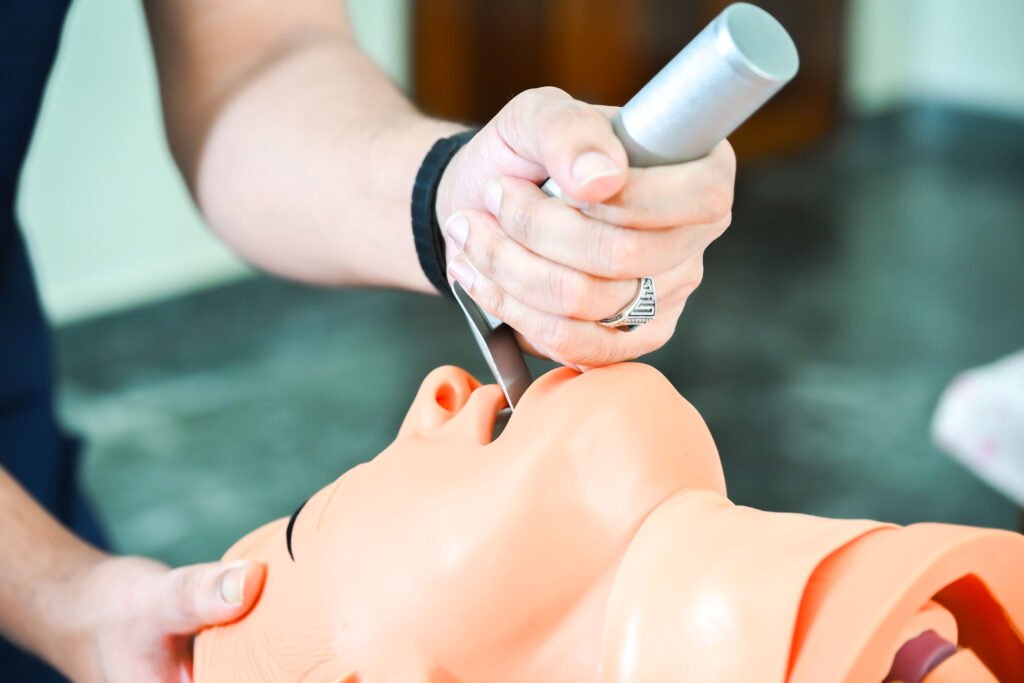
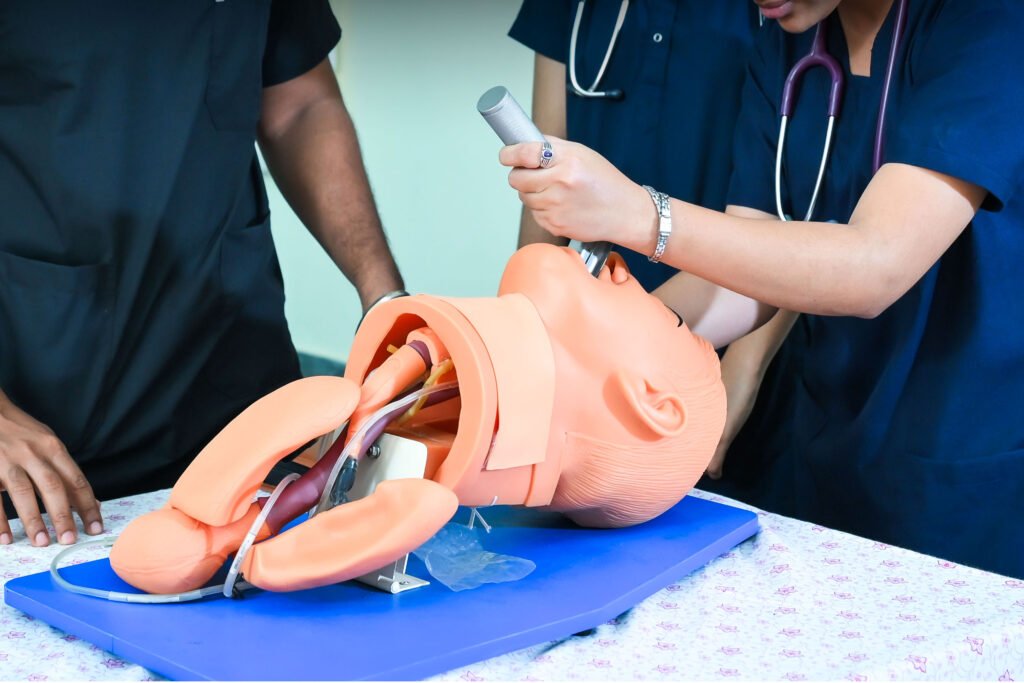
- Anaesthesiology: High-fidelity simulation for ACLS, operation of automated and manual defibrillators, airway management (bag-mask ventilation, LMA insertion, endotracheal intubation), and central venous cannulation (internal jugular, subclavian, and femoral veins)
Phase I MBBS
Anatomy: Surface anatomy of upper and lower limbs, major joints, injection techniques, routes of drug administration, per vaginum and per rectum examinations, intravenous cannulation
Physiology: Blood pressure measurement, auscultation of normal heart and lung sounds, recording of 12-lead ECG
Community Medicine: Cardiopulmonary resuscitation and First Aid, patient transport, universal precautions, and communication skills
Phase II MBBS
Pathology: Biopsy techniques for various organs
General Medicine: Patient–doctor communication, history taking, and clinical examination of major organ systems through role play; recognition of abnormal heart and lung sounds using audio simulations
Anaesthesiology: Basic Life Support (BLS) using infant, child, and adult CPR manikins
Phase III Part I MBBS
ENT: Otoscopic examination and identification of ear pathologies
Ophthalmology: Fundus examination
Surgery: Breast examination, digital rectal examination, proctoscopy, and trauma patient assessment
Obstetrics: Conduct of normal delivery and detection of uterine and adnexal pathology on per vaginum examination
Phase III Part II MBBS
Medicine: Auscultation of normal heart and lung sounds, lumbar puncture, and extensive training in recognition of common cardiac arrhythmias
Surgery: Skin suturing, excision of swellings, incision and drainage, nasogastric tube placement, Foley’s catheterization, tracheostomy, cricothyrotomy, and intercostal drain insertion
Obstetrics: Repair of episiotomy wounds
Paediatrics: Newborn resuscitation, Advanced Cardiac Life Support (ACLS) for newborns and children, peripheral intravenous and umbilical vein cannulation
Anaesthesiology: High-fidelity simulation for ACLS, operation of automated and manual defibrillators, airway management including bag-mask ventilation, LMA insertion, endotracheal intubation, and central venous cannulation via internal jugular, subclavian, and femoral veins
Training Programmes
First Aid and CPR Training – Students
Every year, over 150 MBBS, BDS, and MDS students receive structured training in First Aid and resuscitation through dedicated First Aid and CPR classes at the Skills Lab. The Skills Lab at SMIMS remains a cornerstone of competency-based medical education, ensuring future healthcare professionals are skilled, confident, and prepared to deliver safe and effective patient care.
Non-AHA Basic Life Support (BLS) Programme – Nurses
Regular BLS training programmes are conducted for all nursing staff of SMIMS. Since the establishment of the Skills Lab, the majority of nurses have been successfully trained and certified in CPR.