1. SPECIALITY SERVICES
CONSERVATIVE & AESTHETIC SERVICES (RESTORATION)
- The goal here is "minimum intervention, maximum tooth preservation."
- Biomimetic Restorations:Using materials that mimic the strength and flexibility of natural enamel and dentin.
- Inlays and Onlays: Laboratory-made "puzzle pieces" usedwhen a cavity is too big for a filling but doesn't quite need a full crown.
- Smile Design & Veneers: Aesthetic improvements using thin layers of porcelain or composite to correct chips, gaps, or discolouration.
- Micro-abrasion and Bleaching: Non-invasive treatments for deep-seated stains (internal bleaching is often done after an RCT).
ADVANCED ENDODONTIC SERVICES (INTERNAL TREATMENT)
- These procedures focus on the dental pulp (the "nerve") and the roots.
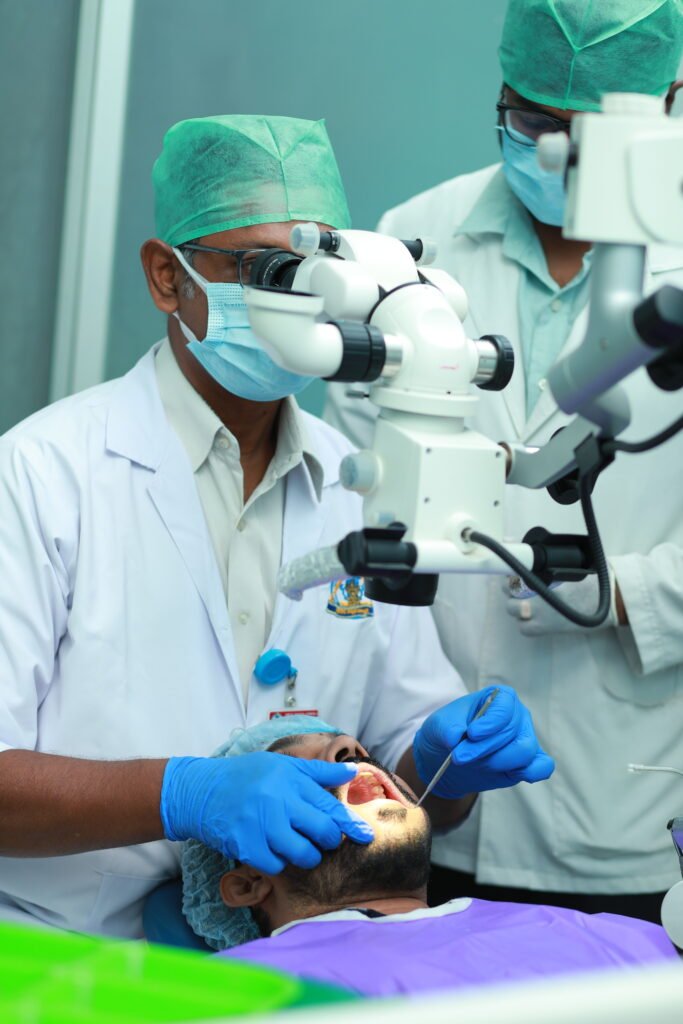
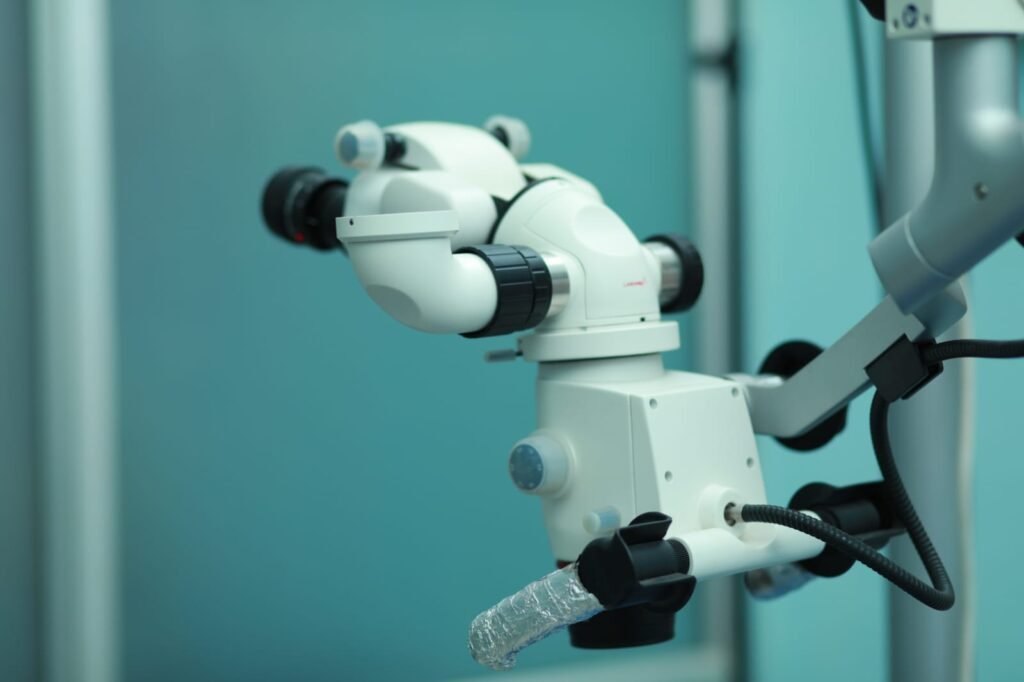
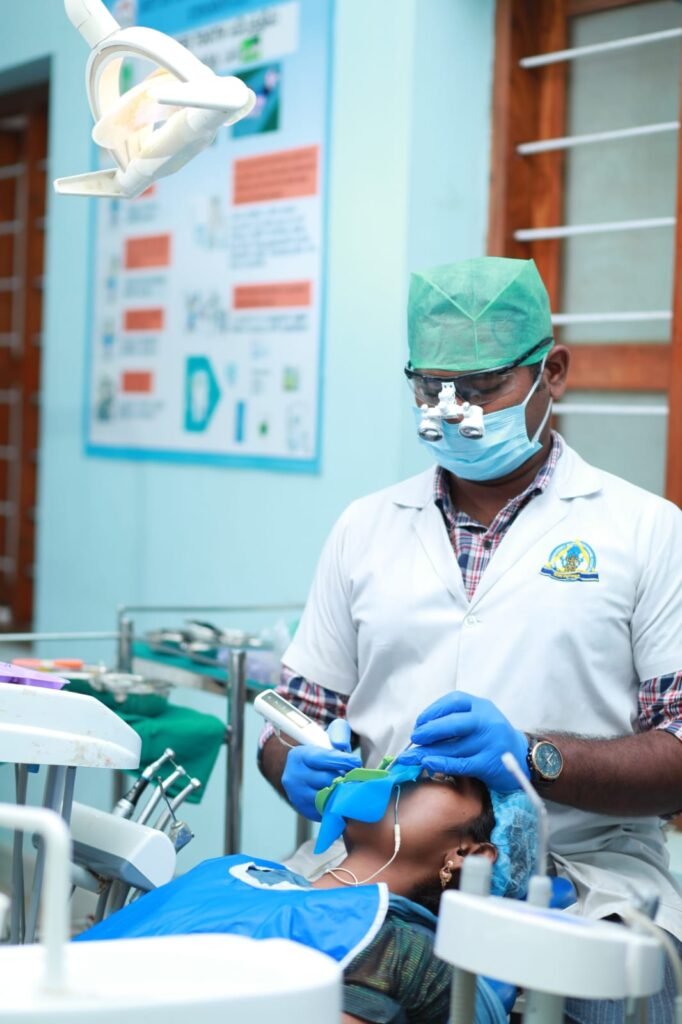
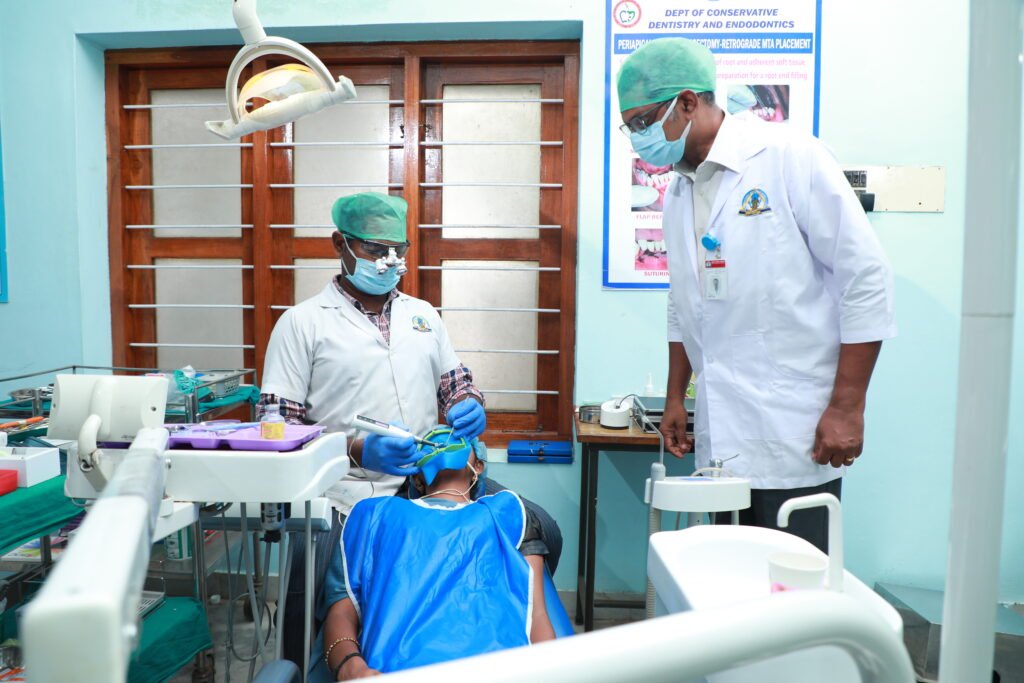
- Microscopic Root Canal Treatment (RCT): Using high-powered surgical microscopes to locate hidden canals andensure thorough cleaning.
- Endodontic Retreatment: Fixing a previous root canal that has failed due to new infection or complex anatomy.
- Surgical Endodontics (Apicoectomy): A microsurgical procedure to remove the tip of a tooth’s root when traditional RCT isn't enough.
- The treatment of dental perforation aims to immediately seal the communication between the root canal system and the periodontal tissues to prevent infection and promote healing.
- Early detection is crucial for a favourable prognosis. Once identified, the area should be isolated using a rubber dam to prevent contamination
- Management of Dental Trauma: Specialized care for teeth that have been fractured, loosened, or knocked out entirely.
- Regenerative Endodontics: Using stem cell concepts to help a damaged or immature tooth continue to grow and heal.
2. PROCEDURE
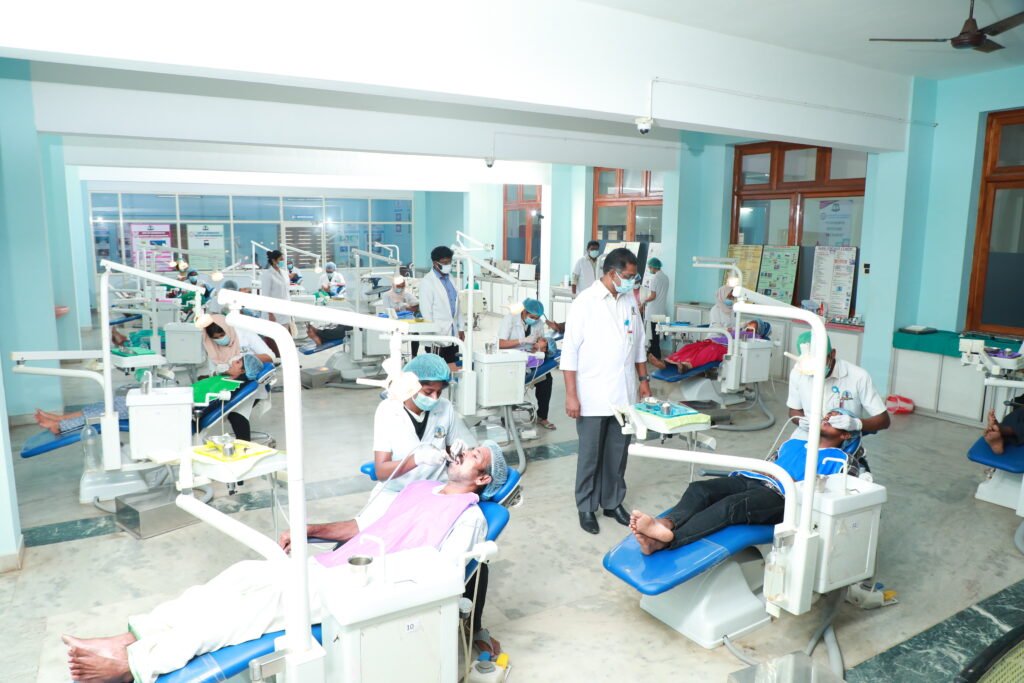
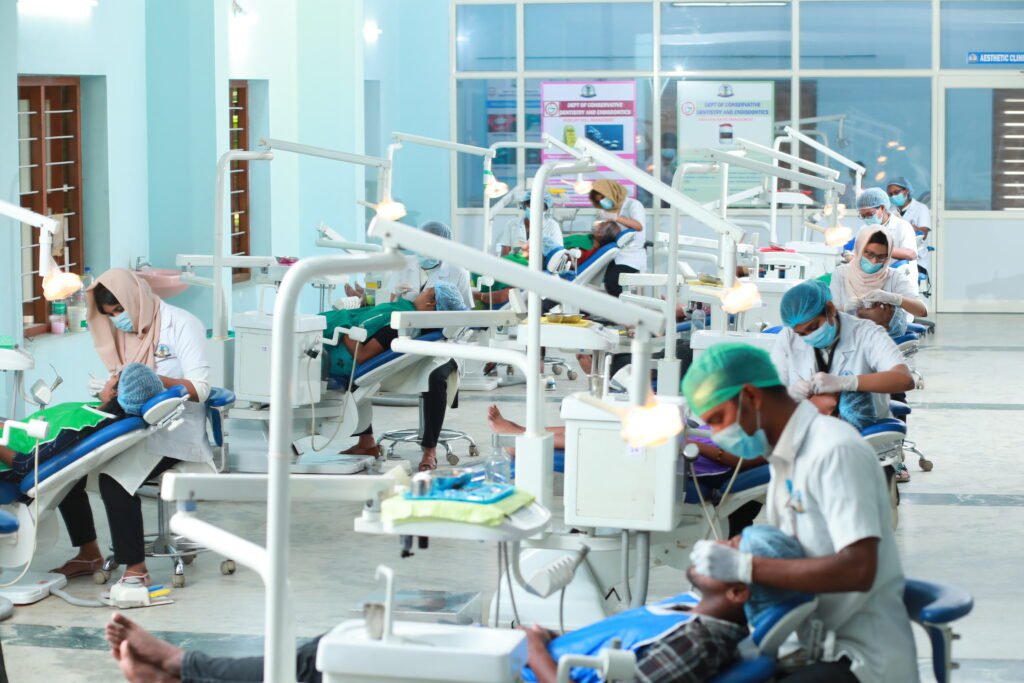
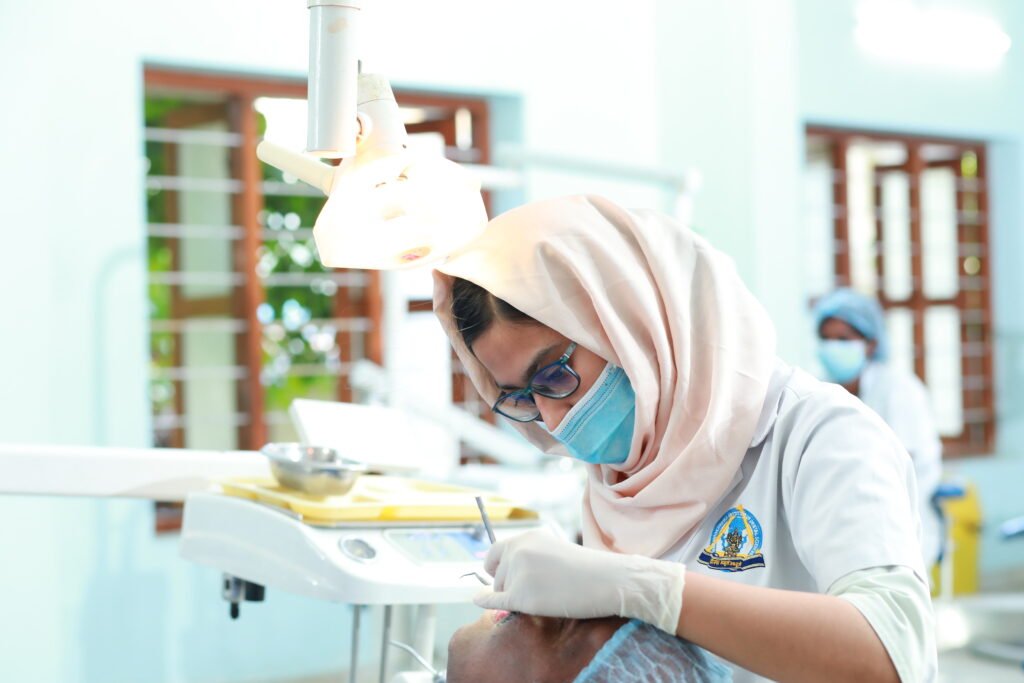
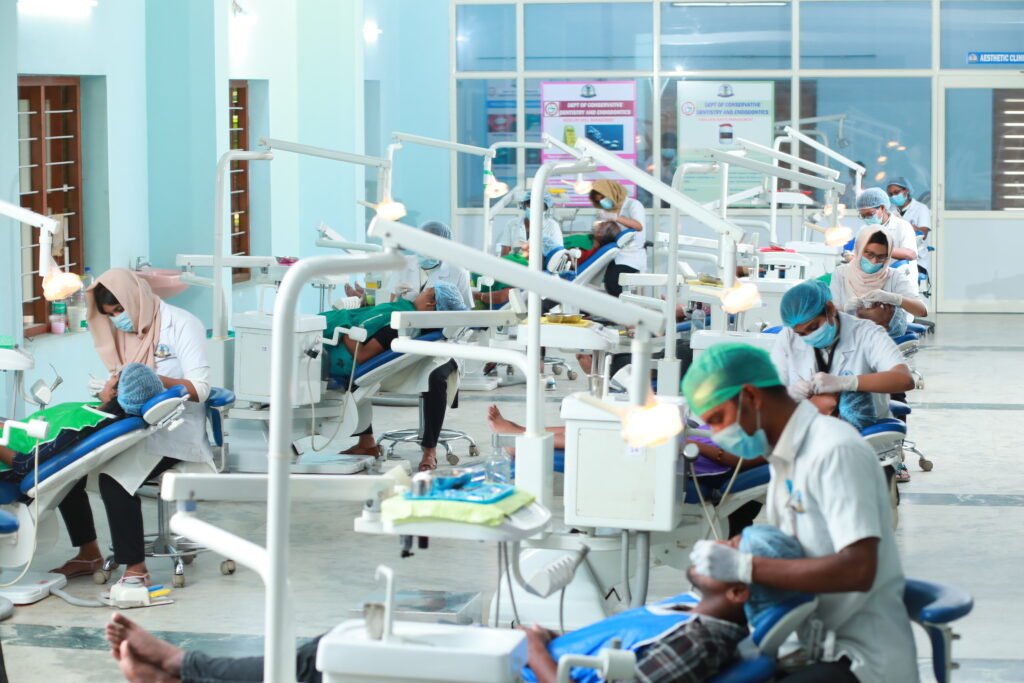
The department offers a wide range of Diagnostic and therapeutic procedures. The workflow is split into two main clinical pathways: Restorative (Conservative) and Endodontic (Root-related). Both follow a structured sequence to ensure maximum tooth preservation.
PHASE 1: DIAGNOSTIC & URGENT CARE
- Before any "drilling" begins, the clinician must establish a definitive diagnosis.
- Clinical Evaluation: History taking, visual inspection, and palpation.
- Special Tests: * Pulp Vitality: Thermal (cold/hot) and Electric Pulp Testing (EPT) to see if the nerve is alive.
- Perio-probing: To check for underlying cracks or gum involvement.
- Radiographic Analysis: Taking digital X-rays (RVG) or a CBCT (3D scan) for complex root anatomy.
- Urgent Phase: If the patient is in acute pain, an "Emergency Pulpotomy" or "Incision and Drainage" is performed immediately to provide relief.
PHASE 2: RESTORATIVE PROCEDURE (CONSERVATIVE)
- Isolation: The "Gold Standard" is the Rubber Dam. It keeps the tooth dry and sterile, which is essential for modern adhesive materials.
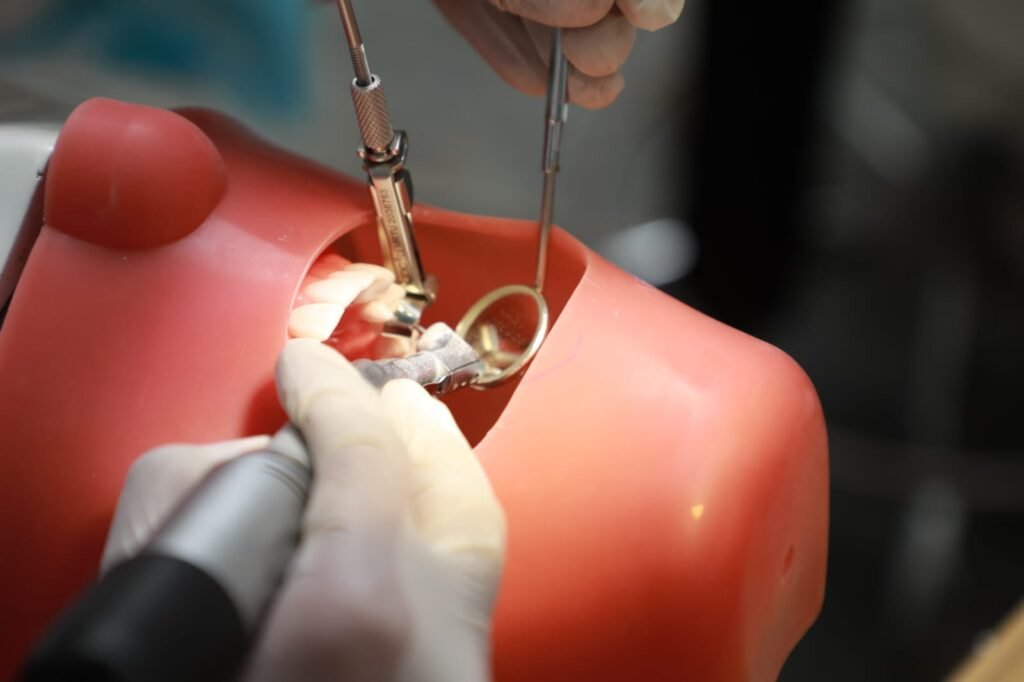
- Caries Excavation: Removing the decay using high-speed handpieces for enamel and slow-speed for sensitive dentin.
- Biomimetic Build-up: Etching & Bonding: Applying acid and adhesive to create a microscopic bond.
- Incremental Layering: Filling the tooth in small "increments" to prevent shrinkage and mimic natural tooth anatomy.
- Finishing & Polishing: Using discs and pastes to ensure the bite is perfect and the surface is as smooth as natural enamel.
PHASE 3: ENDODONTIC PROCEDURE (ROOT CANAL)
- When the infection has reached the pulp
- Access Cavity: Creating a precise opening in the top of the tooth to reach the canals.
- Cleaning & Shaping: * Working Length: Using an Electronic Apex Locator to find the exact tip of the root.
- Mechanical Shaping: Using flexible Nickel-Titanium (NiTi) Rotary Files to clean out infected tissue.
- Disinfection: Irrigating the canals with antimicrobial solutions (like Sodium Hypochlorite), often activated by Ultrasonic or Laser devices to reach micro-canals.
- Obturation: Filling the cleaned space with a biocompatible material (Gutta-Percha) and a Bio ceramic Sealer to create a hermetic seal.
- Post-Endo Restoration: Since root-canalled teeth are brittle, they are usually "reinforced" with a Fiber Post or a Full Crown (often made via CAD/CAM milling).
PHASE 4: QUALITY CONTROL & FOLLOW-UP
- Post-Operative X-ray: To confirm the filling/root canal is perfectly sealed to the tip.
- Occlusal Check: Ensuring the new restoration doesn't hit "high" when the patient bites down.
- Recall: Scheduling a 6-month follow-up to check for bone healing (periapical repair).
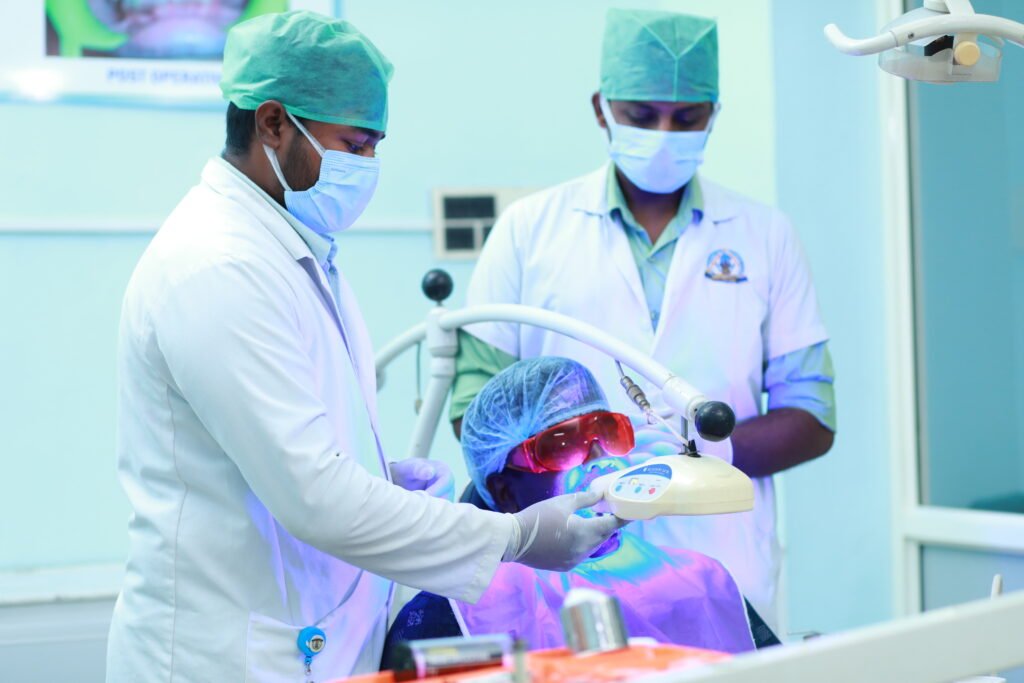
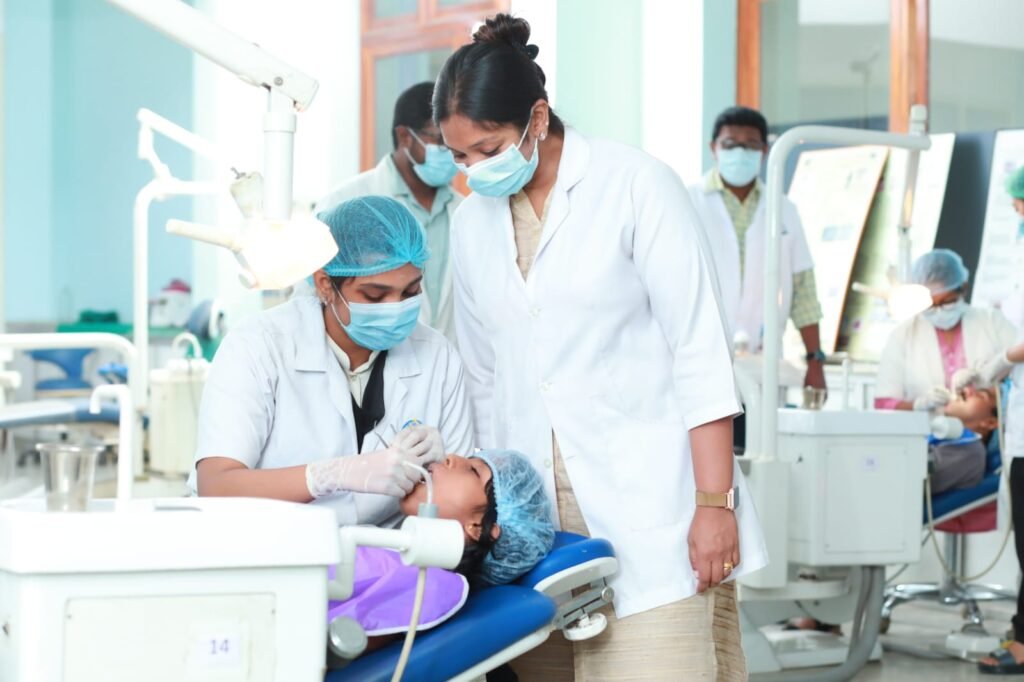
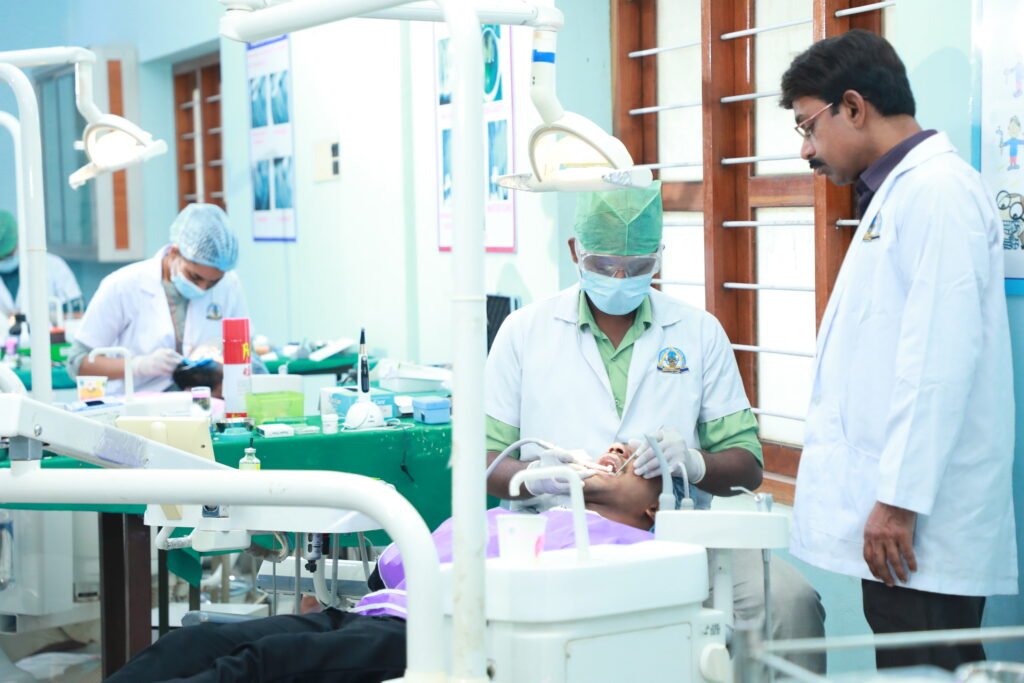
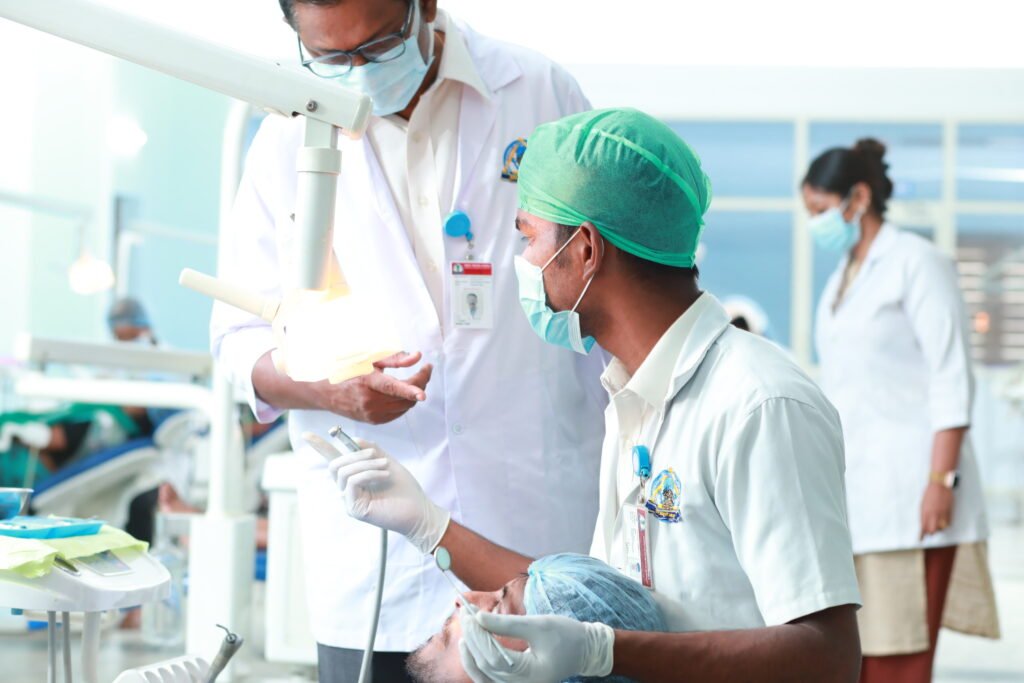
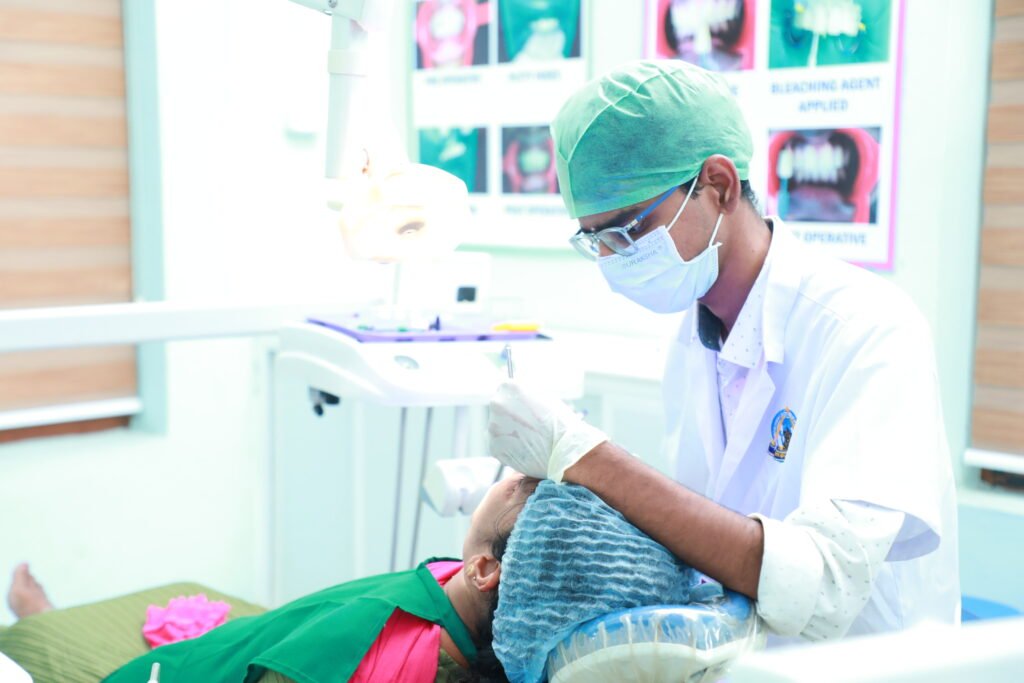
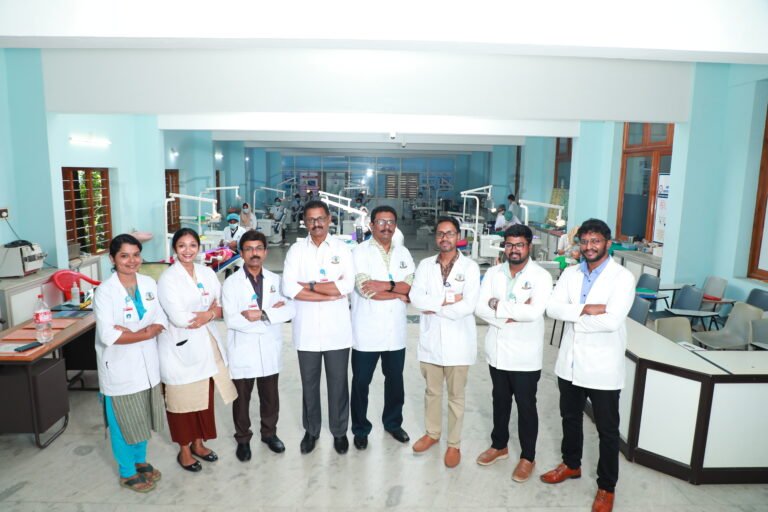
- All procedures are carried out by trained Specialists and Post graduate residents under expert supervision, ensuring precise diagnosis, treatment planning, and optimal functional and aesthetic outcomes.
3. TEACHING PROGRAMME
FOR Undergraduate
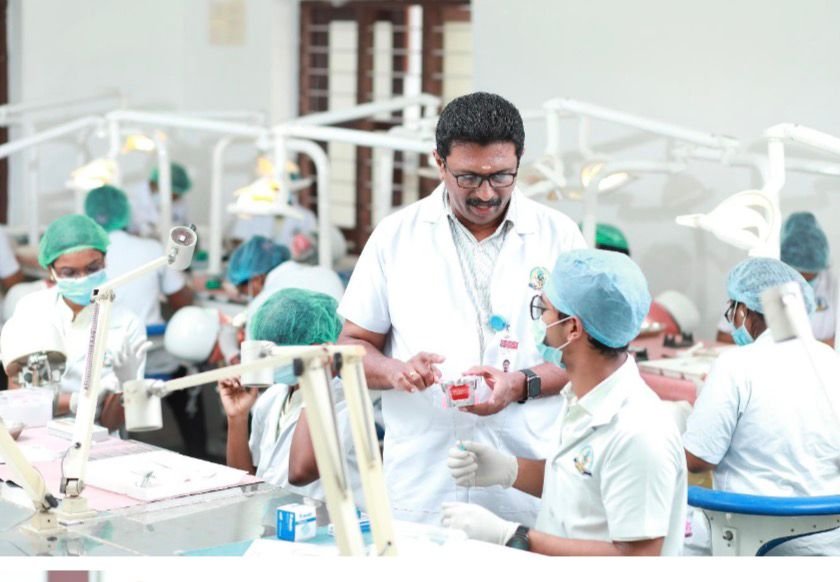
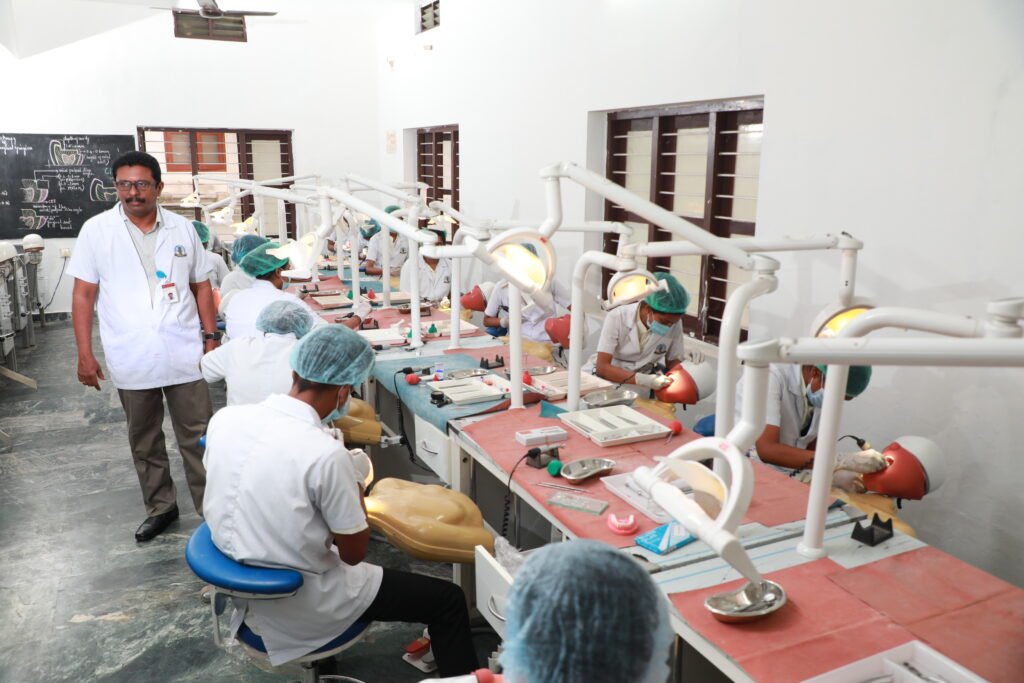
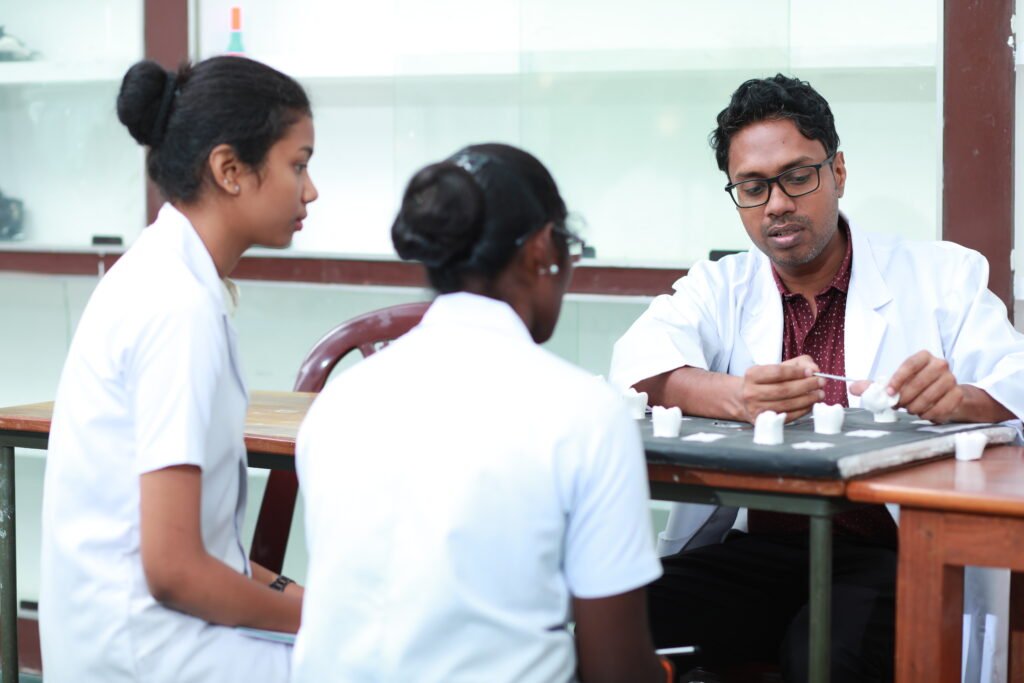
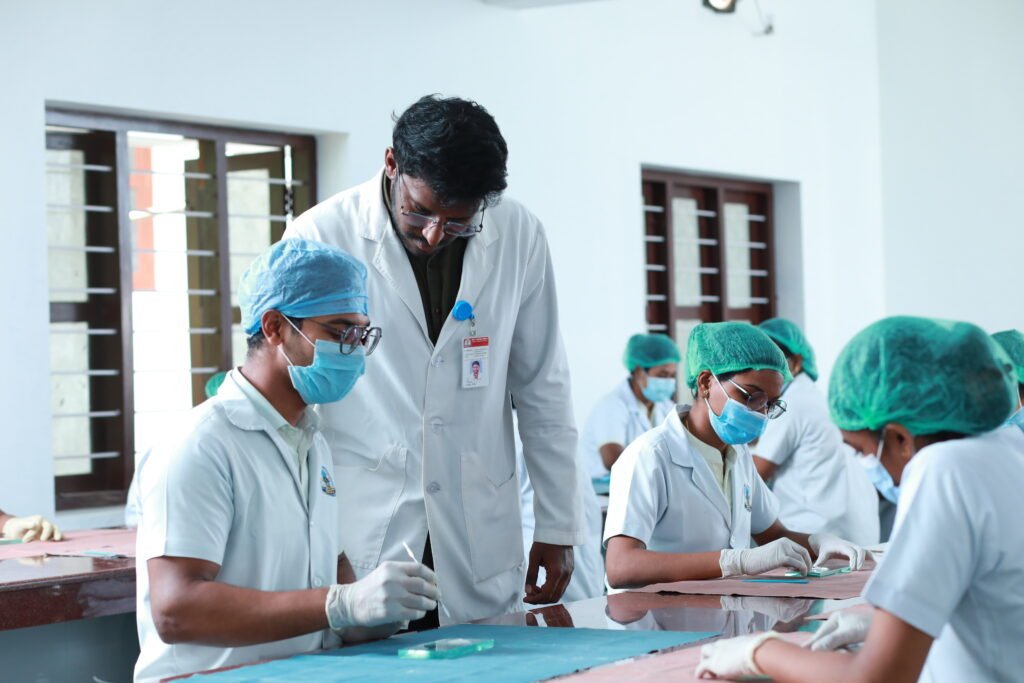
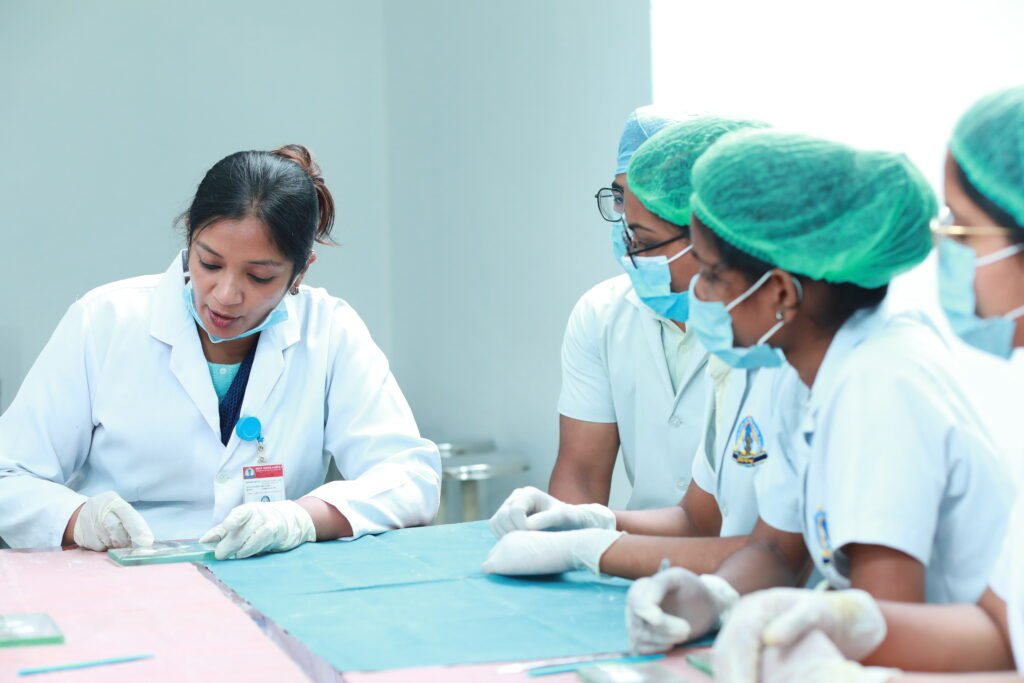
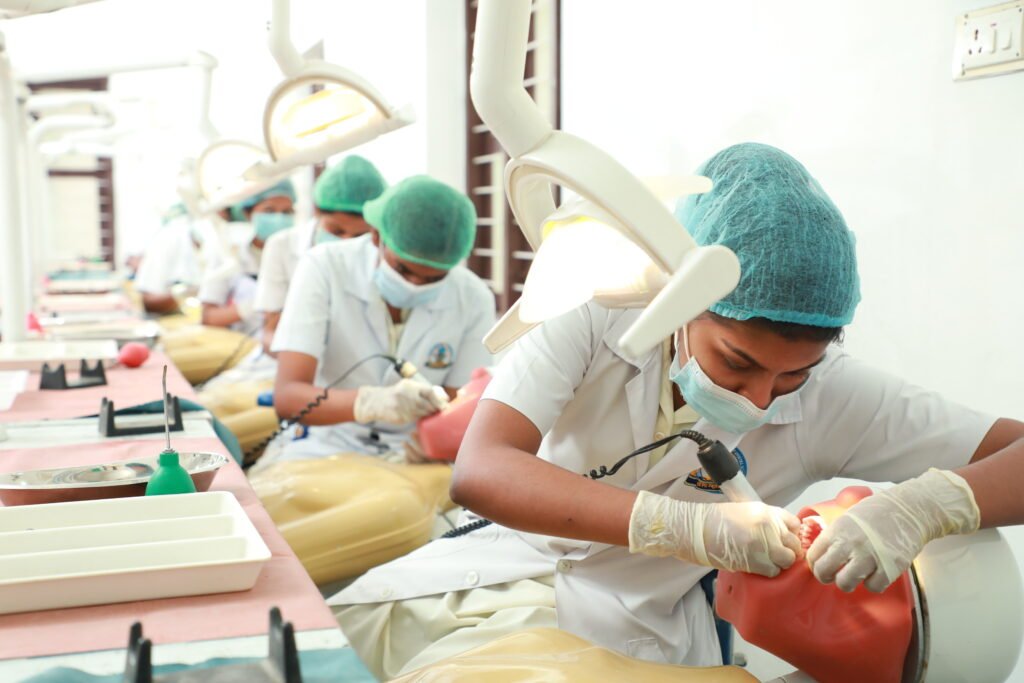
Undergraduate students are taught Conservative Dentistry and Endodontics as part of the B.D.S. curriculum. Upon graduation, the students are expected to be capable of assessing a patient’s general and oral health and of formulating a comprehensive treatment plan, which might include components from other dental disciplines
The course will enable the student to acquire knowledge of the relevant clinical literature, to develop a scientific approach to solving problems. The course contains didactic, practical & clinical components, and taught to a high standard. The course will provide a foundation for successful clinical practice, or a stepping-stone toward an academic career.
For Post Graduate
The department offers full time post- graduate study over three years, which is specialized and more than the scope of general practice, with emphasis on restoration of appearance, occlusal form and function, aesthetic dentistry, full mouth rehabilitation, endodontic therapy and surgeries. The course involves case discussions, weekly journal club meetings, clinical-theoretical seminars, literature review, lectures and an independent research study which would lead to the submission of a dissertation to the University.
In addition, post graduate students are actively involved in the teaching of undergraduates as well as in active patient care. Research is also emphasized upon with mandatory participation and presentations in national as well as international conferences.
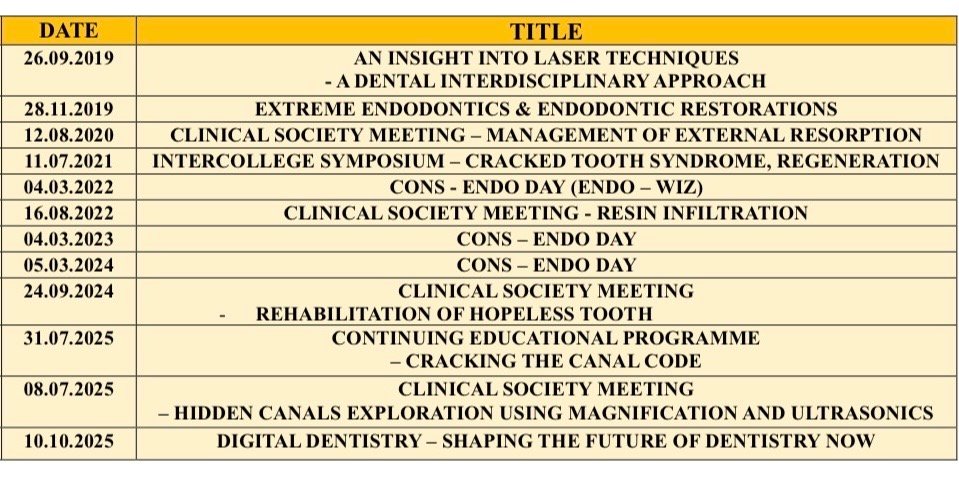
4. CDEs, WORKSHOPS, EVENTS DONE IN THE DEPARTMENT:
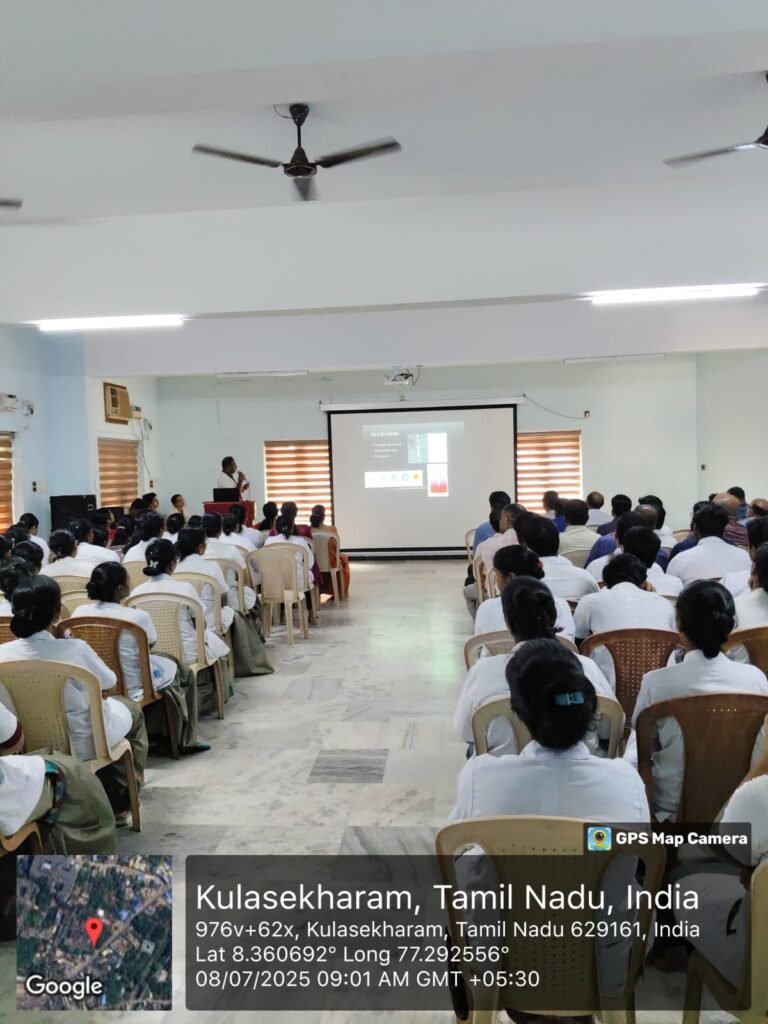
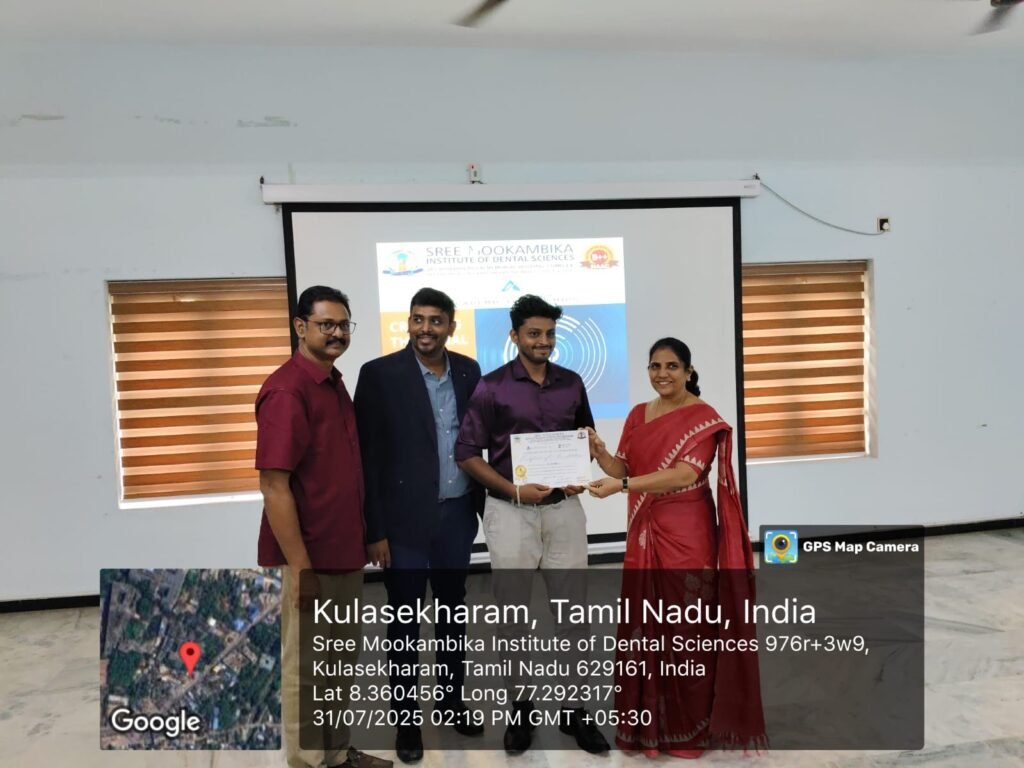
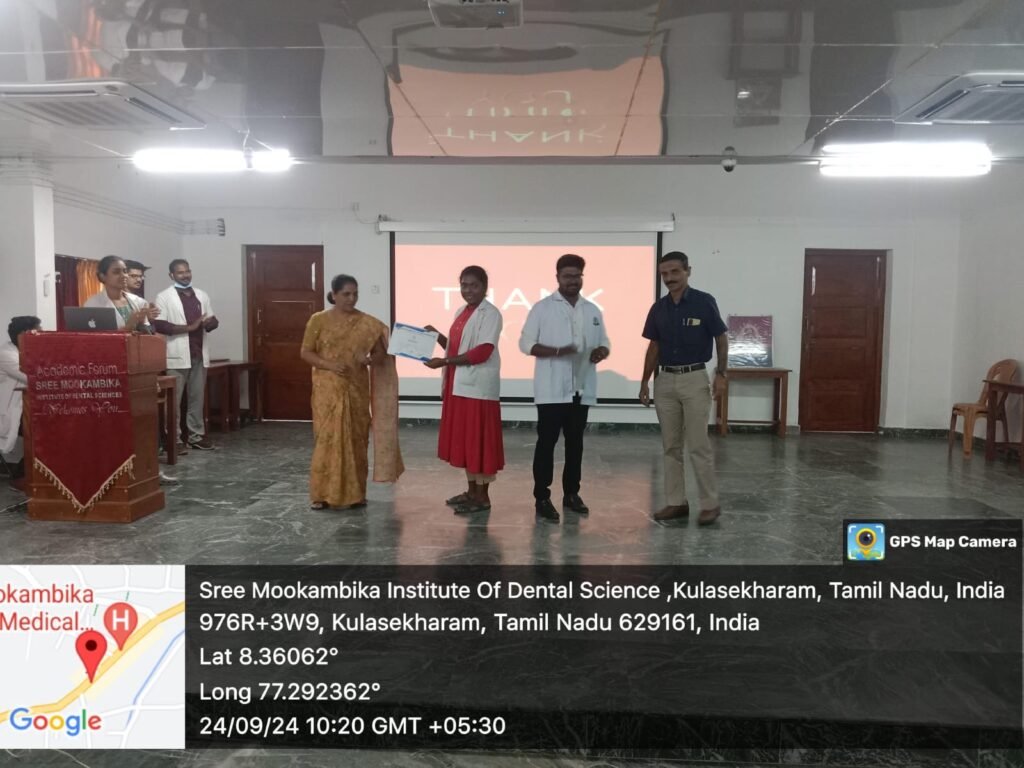
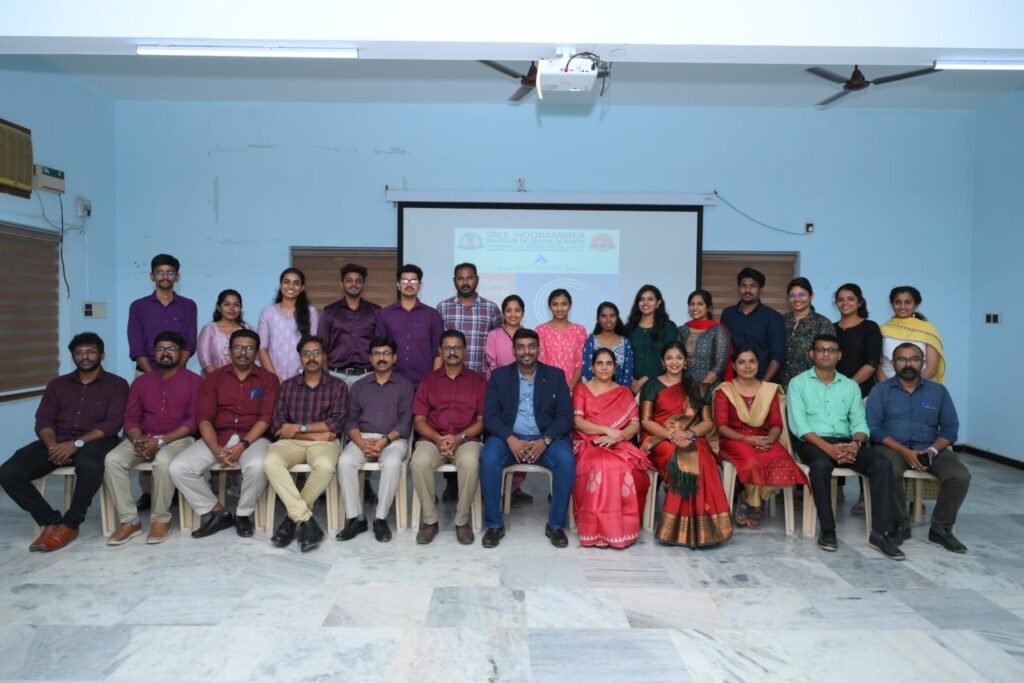
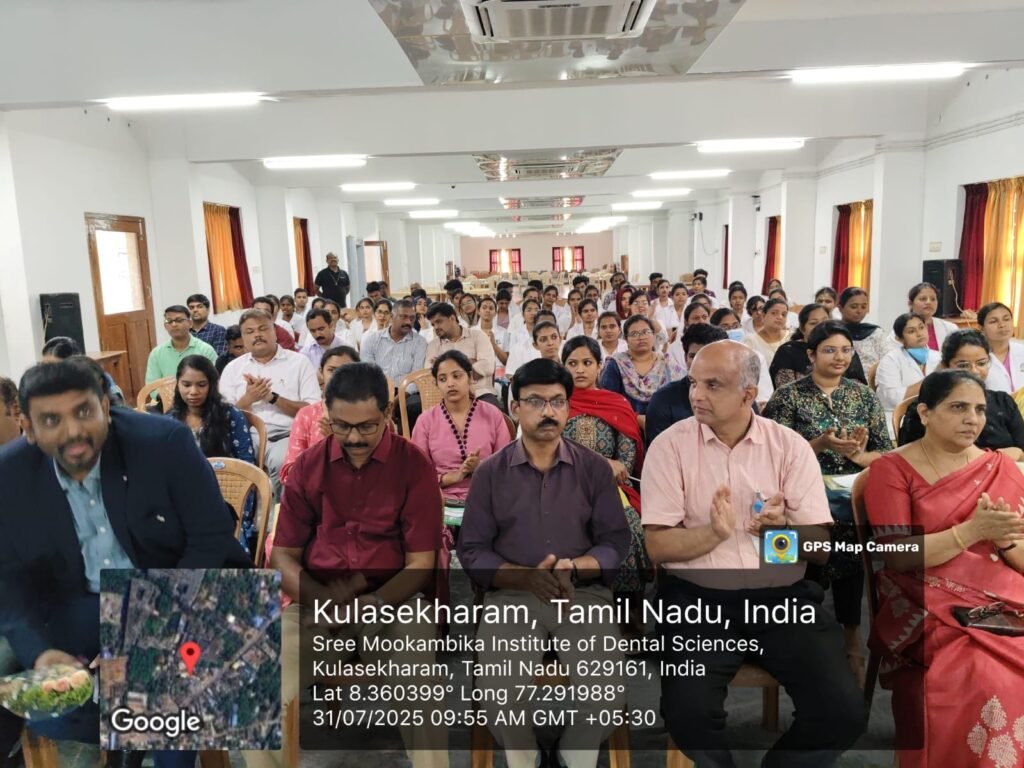
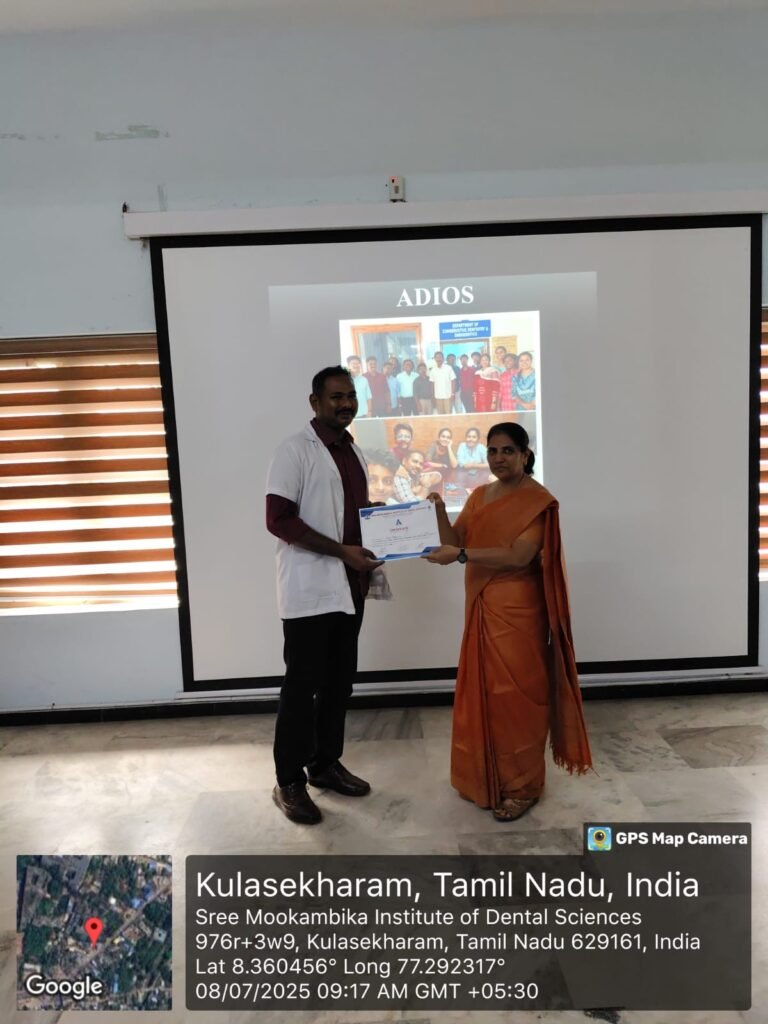
The Department of Conservative Dentistry and Endodontics actively organizes and participates in Continuing Dental Education (CDE) Programmes, Workshops, and academic conferences to promote knowledge exchange, clinical excellence, and advancements in Dental practice.
5. MERITS AND OTHER ACHIEVEMENTS
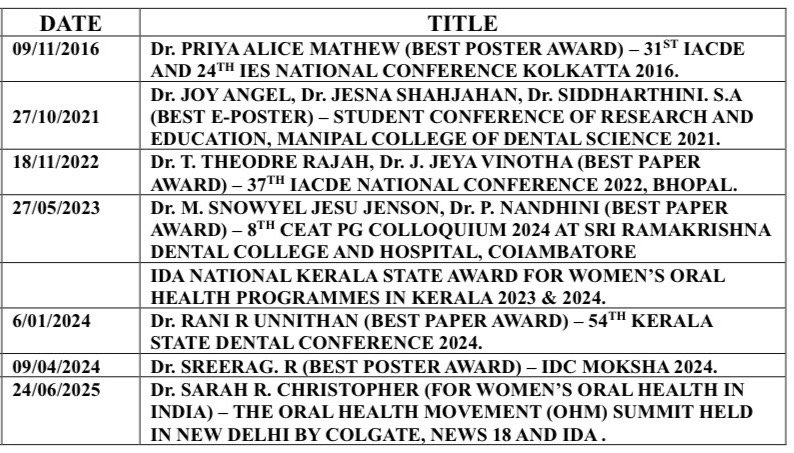
- The department has consistently demonstrated excellence in academics, clinical performance and research contributions.
- Faculties participating in national and international conferences as scientific chair persons.
- Postgraduate and undergraduate residents have won best paper awards at various state and national conferences
6. PUBLICATIONS
7.RESEARCH